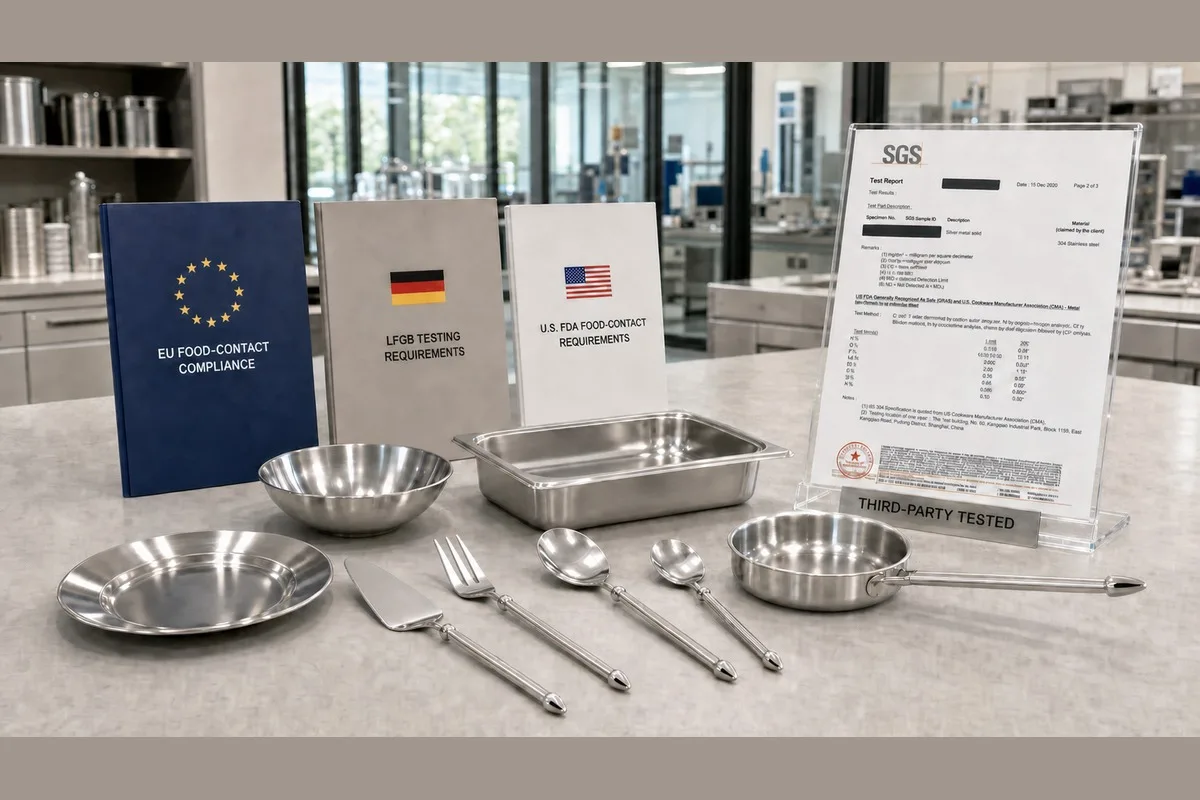
Stainless steel cookware certifications — LFGB (Germany/EU), FDA (US) and SGS (third-party testing) — are food-contact compliance documents that determine which markets a supplier can legally sell into. For reference, our SUS 304 double-wall platinum bowl and stainless steel seafood pan are both produced to order with custom branding and flexible MOQ.
Food-contact products are regulated, and the certifications your stainless steel cookware carries decide which markets you can legally sell into. Order without the right paperwork and your shipment can be held at customs or rejected by a buyer. This guide explains the main certifications, which markets require what, and how to verify a supplier isn’t bluffing.
As a stainless steel kitchenware, tableware and cookware manufacturer exporting to 50+ countries since 2016, we hold FDA and LFGB test reports for selected products, and can arrange additional third-party testing for your specific product and market. Here’s what you need to know — but always confirm the exact requirements for your specific product and destination.
The three you’ll see most
LFGB — Europe (Germany) 🇪🇺
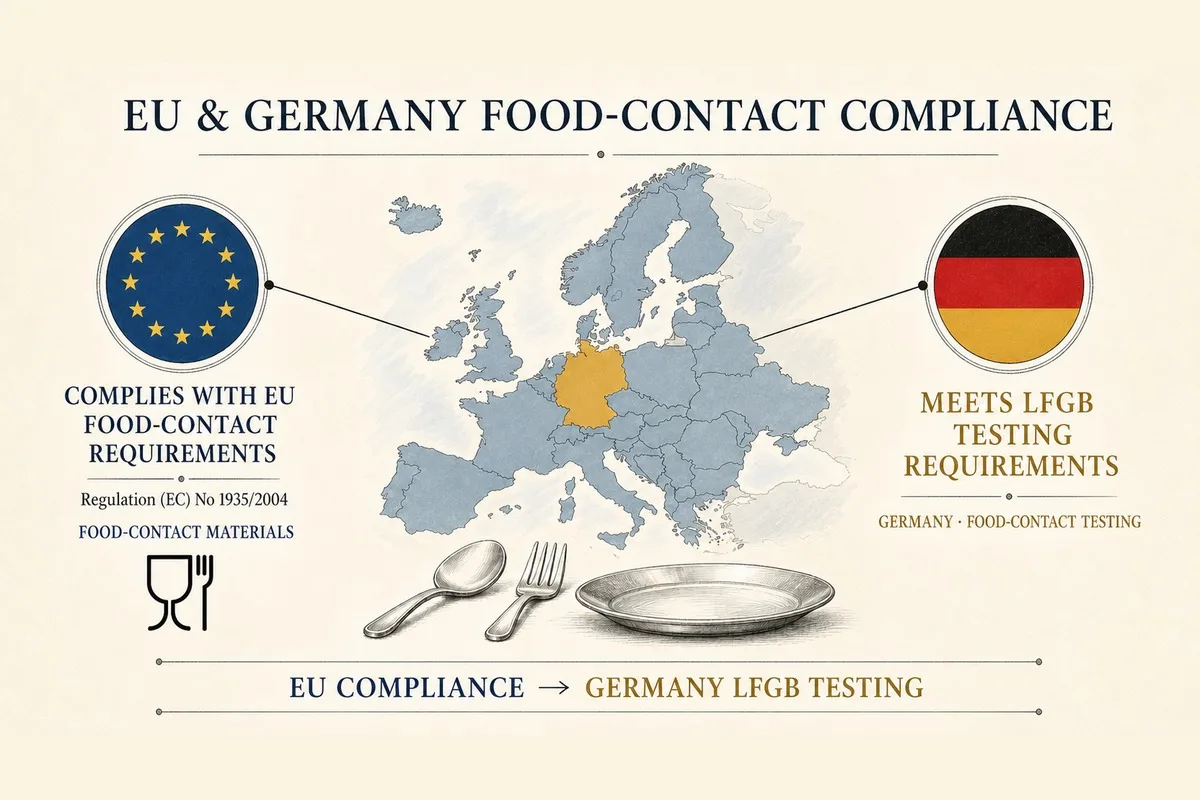
Germany’s food and consumer goods law, widely treated as the strictest EU benchmark for food-contact safety. If a product passes LFGB, it’s generally accepted across much of the EU. Expect LFGB testing for tableware and cookware sold in European markets.
FDA — United States 🇺🇸
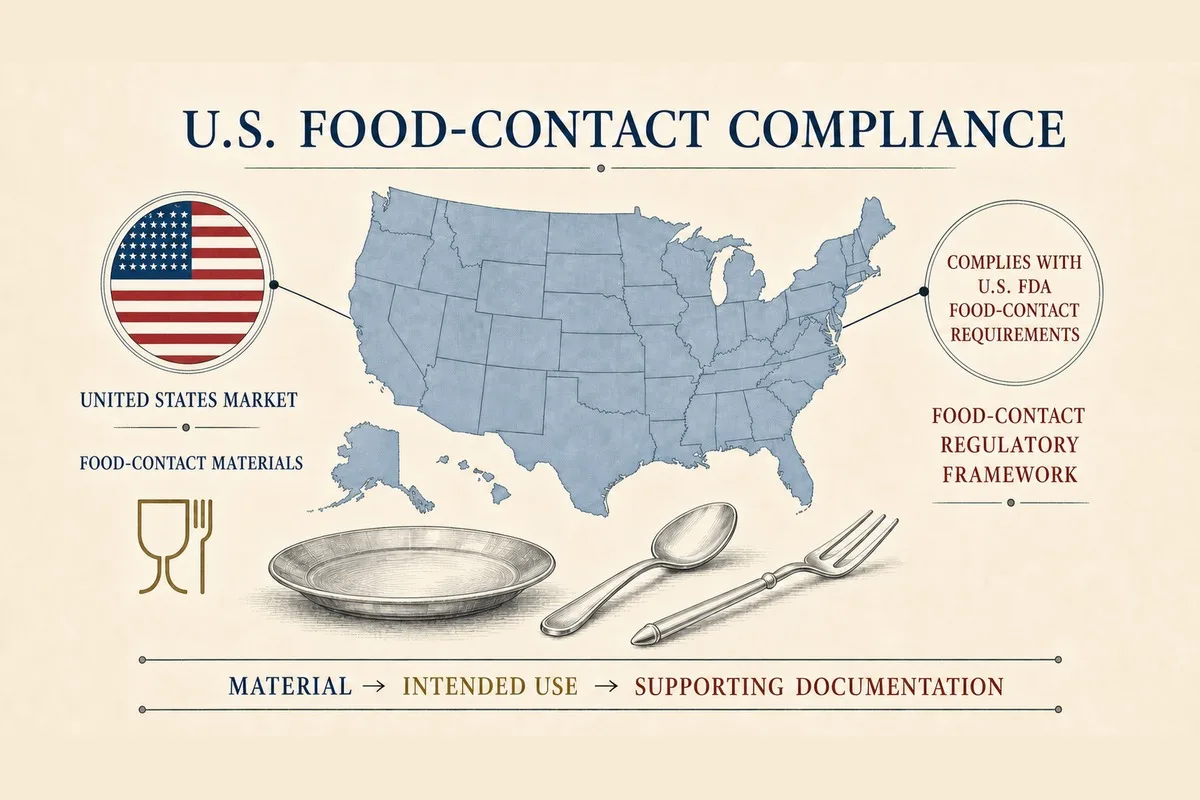
The US Food and Drug Administration sets food-contact material standards. For stainless steel, this centers on the alloy being food-safe (e.g. 304/430 food-grade) and free of harmful migration. Required for the US market.
SGS — third-party verification 🌍
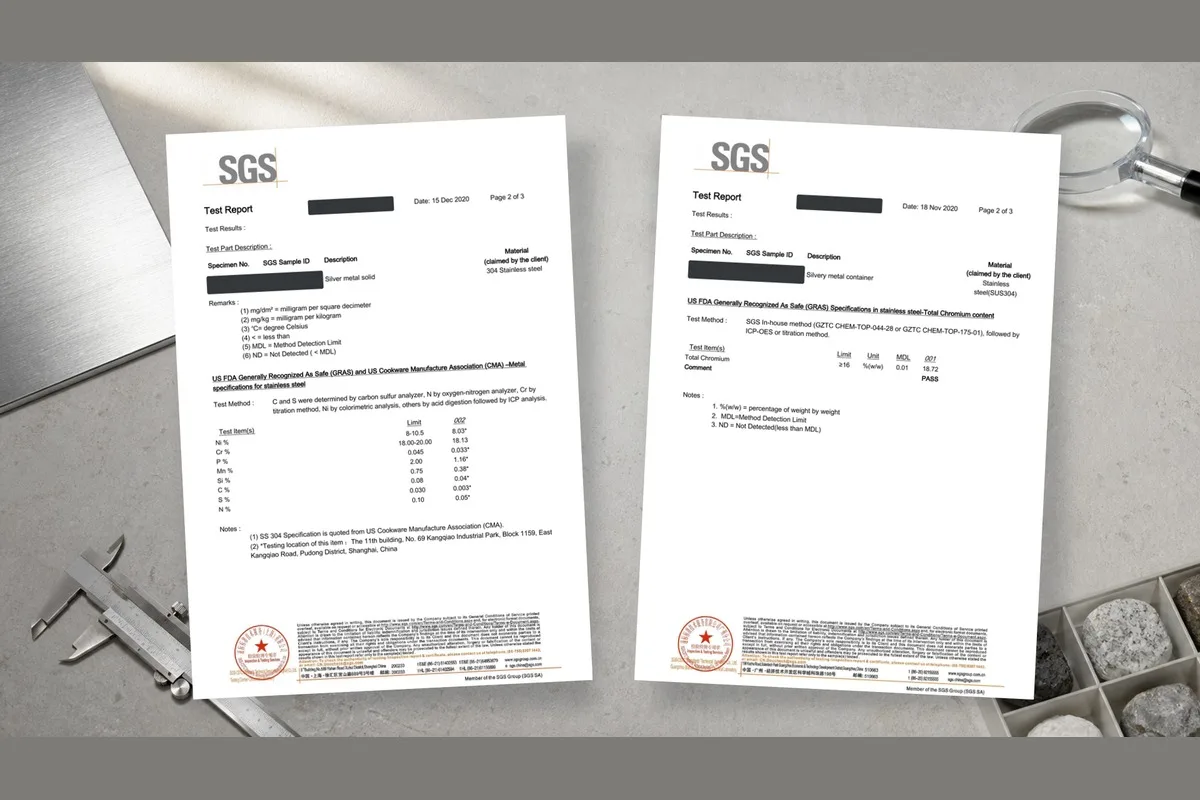
SGS isn’t a government standard but a leading independent testing body. An SGS report verifies a product was tested against a named standard (which could include LFGB, FDA, or others). Buyers often ask for SGS reports as neutral proof.
| Certification | Market | What it proves |
| LFGB | EU / Germany | Strict food-contact safety compliance |
| FDA | United States | US food-contact material compliance |
| SGS (report) | Global | Independent test verification vs a standard |
Which markets need what?
| Destination | Typically expects |
| Germany / EU | LFGB (+ relevant EU food-contact regs) |
| United States | FDA food-contact compliance |
| Middle East / Asia / others | Often SGS reports or local equivalents |
Requirements vary by product type and country. Cutlery, cookware, and food-storage items can face different tests. Always confirm with the supplier and, if unsure, your local importer/customs.
→ Certifications are also part of your customs documents — see importing kitchenware from China.
How to verify a supplier’s certifications (don’t take it on faith)
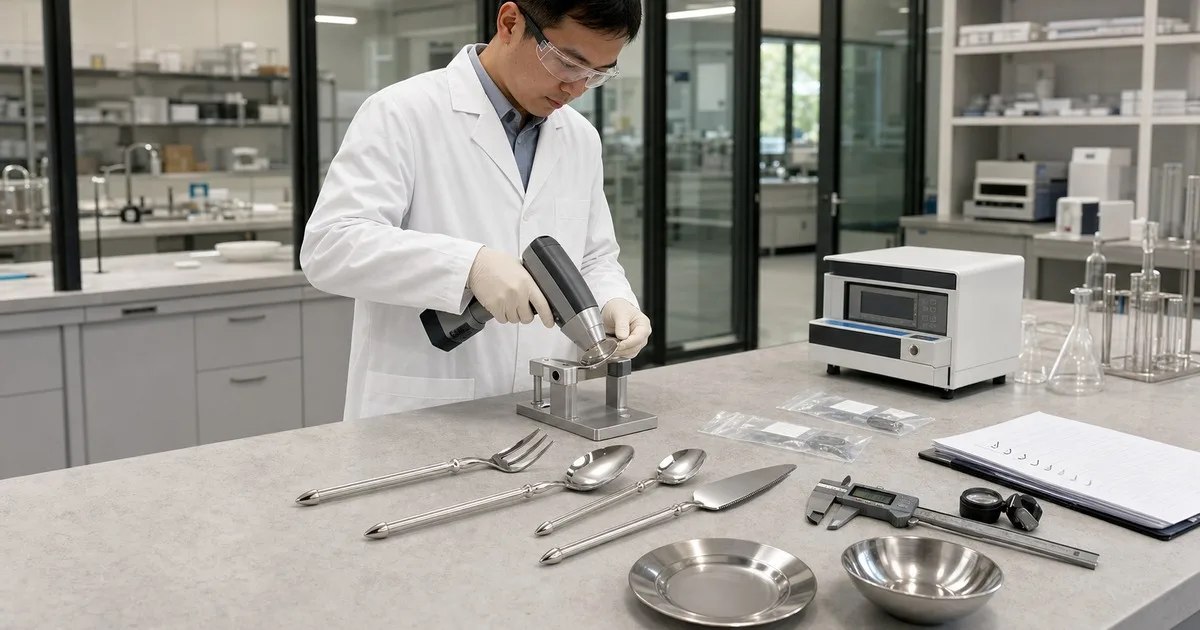
- Ask for the actual report, not just a claim — with the lab name, test date, and standard tested.
- Check the scope — a report covers specific materials/products, not the whole catalog automatically.
- Confirm it’s current — reports have dates; standards update.
- Match it to your market — an FDA report doesn’t cover EU LFGB requirements, and vice versa.
How we handle certification: we hold FDA and LFGB test reports for selected products, and for other products or markets we arrange additional third-party testing through accredited labs (such as SGS) to the standard your destination requires. Ask for the report covering your specific item — and if a fresh test is needed for your market, we’ll scope it so your documentation matches your product, market and shipment. Tell us your destination and we’ll confirm what’s available.
How certification affects cost and lead time
Testing has a real cost and takes time, especially for new products or new standards. If you need certifications you don’t yet have on file, factor in extra lead time for lab testing. Established lines usually already have current reports, which is faster.
→ Plan this into your timeline in the wholesale tableware guide.
FAQ
Is LFGB stricter than FDA? LFGB is widely regarded as one of the strictest food-contact benchmarks. They’re different systems for different markets — passing one doesn’t automatically satisfy the other.
Is an SGS certificate the same as LFGB or FDA? No. SGS is an independent lab; an SGS report shows a product was tested against a named standard, which could be LFGB, FDA, or another.
Are 304 and 430 stainless steel food safe? Both are food-grade. See our stainless steel grade guide for the differences.
Which certifications can you provide? We have FDA and LFGB test reports for selected products, and can arrange additional third-party testing (e.g. SGS) for other items or markets. Tell us your destination market and product, and we’ll confirm what’s available.
Sell into your market with confidence
Yorkers International manufactures stainless steel kitchenware, tableware, and hotel supplies with FDA and LFGB test reports for selected products, plus additional testing arranged as needed — exported to 50+ countries since 2016. Tell us your target market and product list, and we’ll confirm the documentation available.
👉 Request a quote & certification details · Browse our product range.