
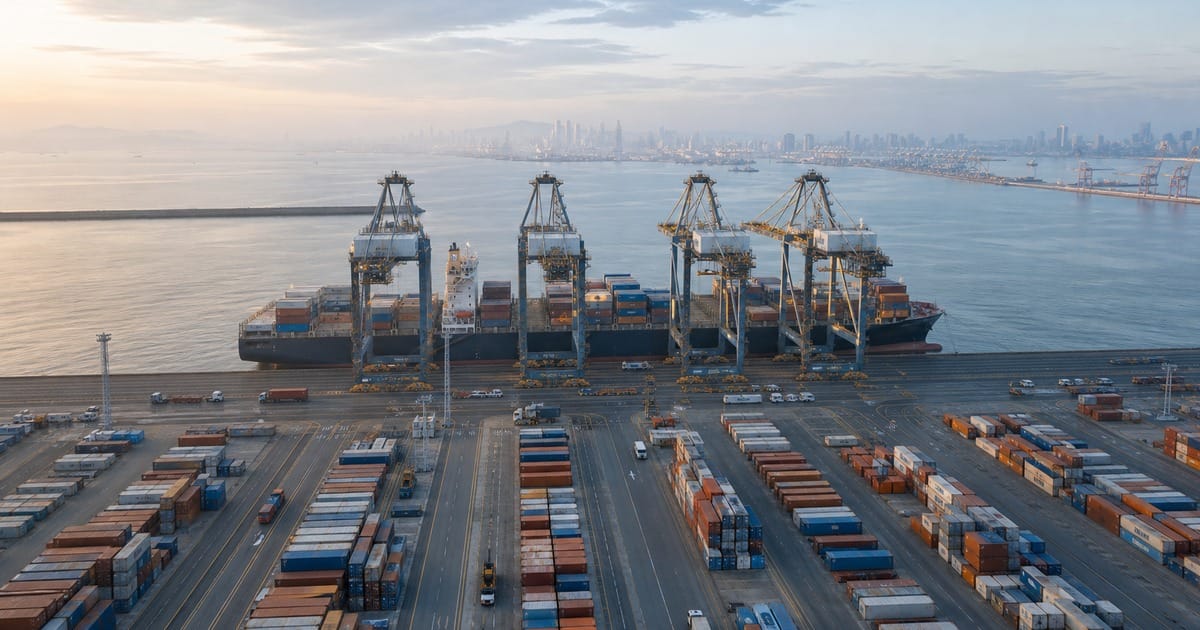
Importing kitchenware from China requires understanding shipping terms (Incoterms), freight modes (sea, air, express), import duties and customs clearance — together these determine a distributor’s real landed cost per unit. For reference, our black stainless steel grater salad bowl and stainless steel seafood pan are both produced to order with custom branding and flexible MOQ.
Sourcing the product is only half the job — importing kitchenware from China smoothly depends on getting shipping terms, freight, and customs right. This guide walks distributors and importers through the practical steps, the terms that decide who pays for what, and how to keep your landed cost predictable.
We’ve shipped stainless steel kitchenware, tableware, and hotel supplies to 50+ countries since 2016, so this reflects how real export orders move — but always confirm duty rates and rules with your own country’s customs, because they vary by destination and HS code.
Step 1: Agree the Incoterms (who pays for what)
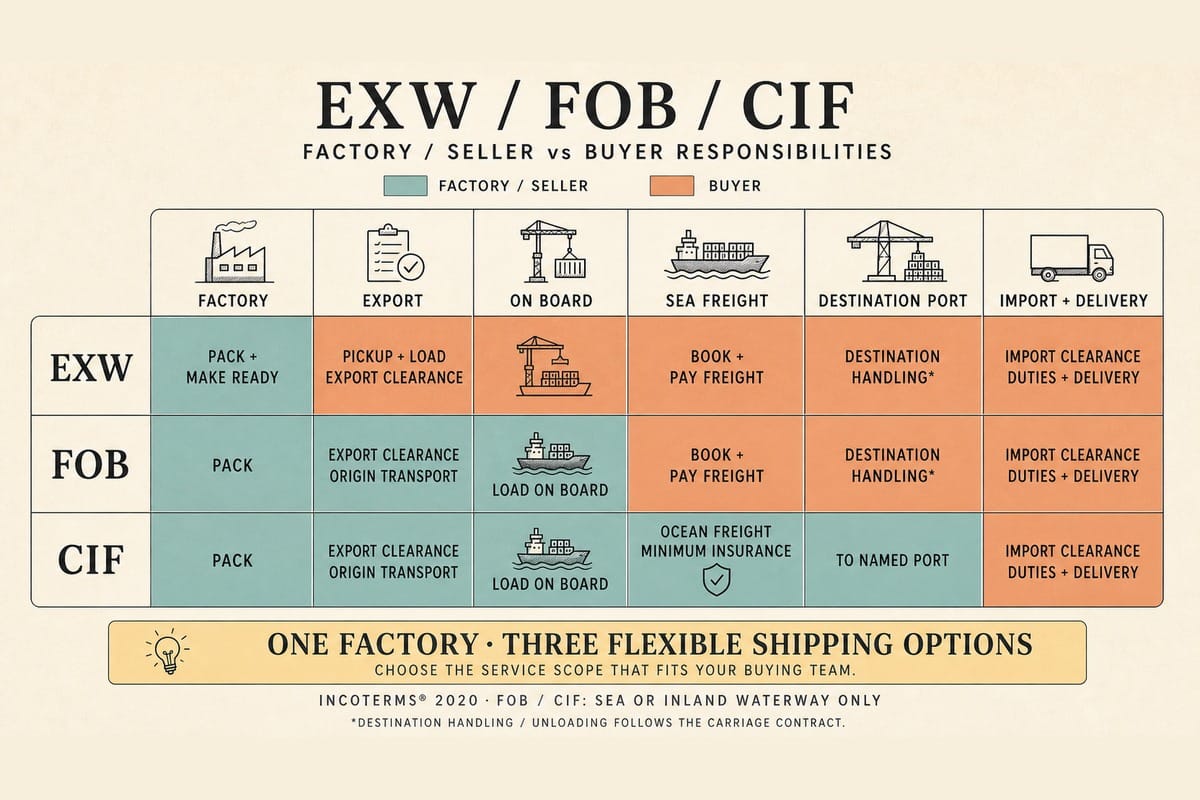
Incoterms define exactly where the supplier’s responsibility ends and yours begins. The three you’ll see most for kitchenware:
| Incoterm | Supplier covers | You cover | Best for |
|---|---|---|---|
| FOB (Free On Board) | Goods to the origin port, loaded | Sea freight, insurance, destination duties/clearance | Buyers with their own freight forwarder |
| CIF (Cost, Insurance, Freight) | Goods + freight + insurance to your port | Destination duties + clearance | Buyers wanting fewer moving parts |
| EXW (Ex Works) | Goods ready at factory | Everything else | Buyers with full local logistics control |
Most experienced importers use FOB with their own forwarder for cost control. New importers often prefer CIF for simplicity. We quote EXW or FOB by default — EXW gives you full control of logistics from our facility, while FOB has us deliver the goods loaded at the origin port. Tell us your preferred terms and we’ll advise.
Step 2: Choose your freight mode
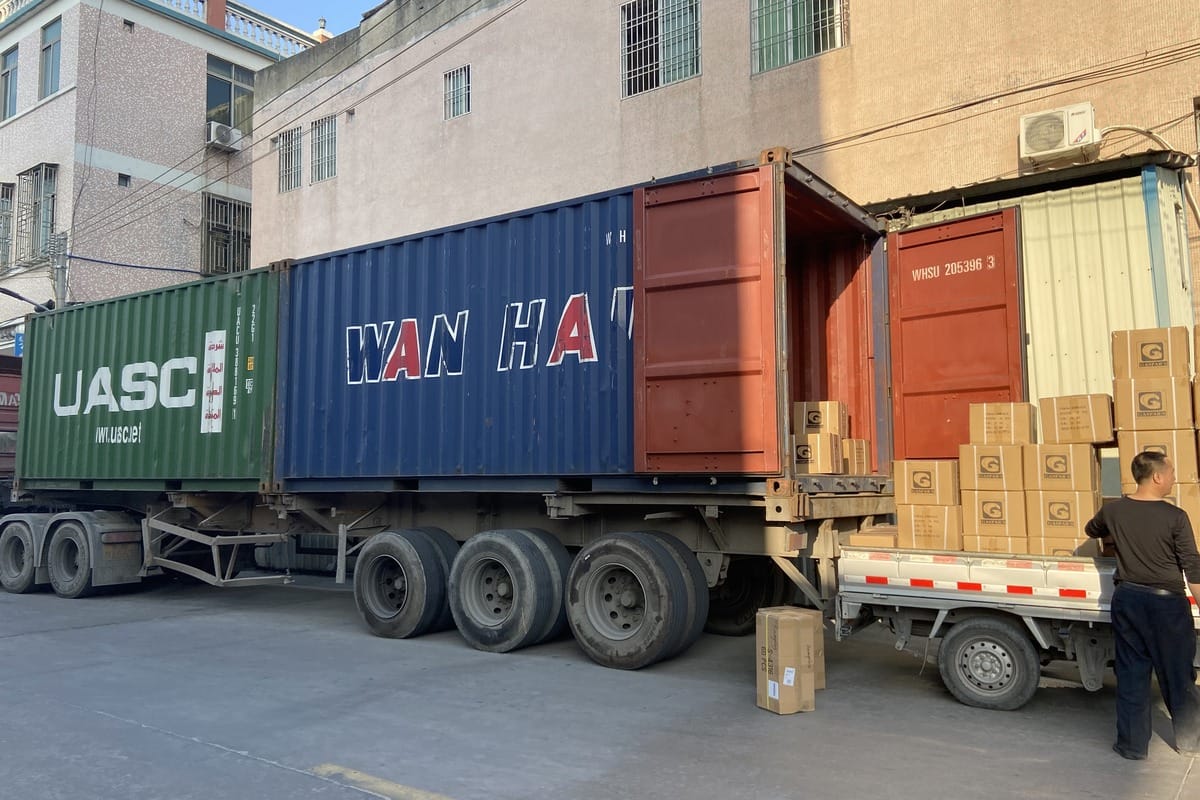
- Sea freight (FCL — full container load): best per-unit cost for volume kitchenware orders. A 20ft or 40ft container.
- Sea freight (LCL — less than container load): for smaller orders; you share a container.
- Air freight: fast but expensive — usually only for samples or urgent small batches.
For most tableware/kitchenware POs, FCL sea freight wins on cost once you hit container volume.
→ Plan volume against MOQ and pricing in our wholesale tableware guide.
Step 3: Budget your landed cost (not just unit price)
Your real cost per unit = product + freight + insurance + import duty + clearance + local delivery. A low unit price means little if duties are high.
- Import duty: depends on your country and the product’s HS code. Confirm the rate with your customs broker before ordering.
- VAT/GST: many countries charge it on import value.
- Clearance & handling: broker fees, port charges.
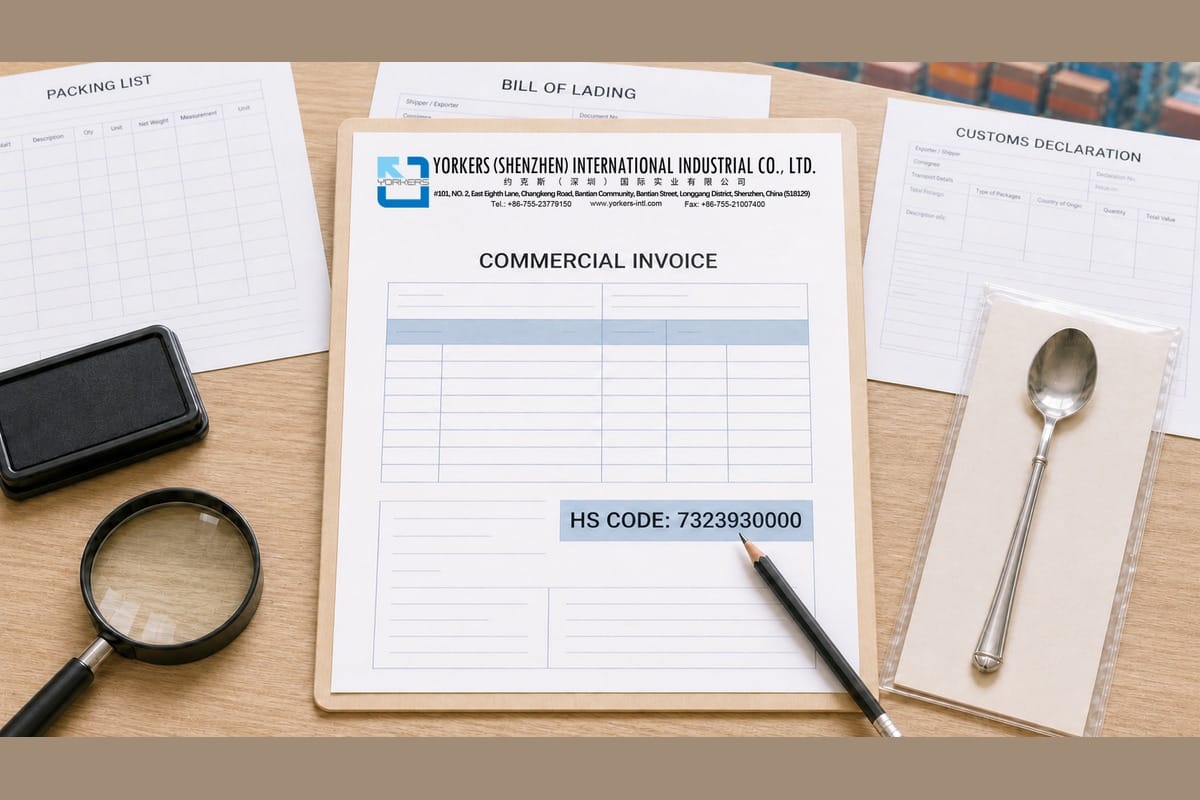
Ask your supplier for the correct HS code and accurate commercial documents — errors here cause customs delays and unexpected charges.
Step 4: Get the documents right
Standard export documents for kitchenware include:
- Commercial Invoice & Packing List
- Bill of Lading (B/L)
- Certificate of Origin (may lower duty under trade agreements)
- Product certifications for your market (LFGB / FDA / SGS)
→ More on compliance: stainless steel cookware certifications.
Step 5: Plan the timeline end to end
Production + booking + sea transit + customs clearance all add up. Sampling takes about 3 days; production lead time depends on your order volume and product (contact us for a schedule), plus freight transit (varies widely by destination — often several weeks) plus clearance. Build a buffer, especially before peak seasons.
Importer’s checklist
- [ ] Incoterm agreed (FOB / CIF / EXW)
- [ ] Freight mode chosen (FCL / LCL / air)
- [ ] HS code + duty rate confirmed with your broker
- [ ] Landed cost calculated (not just unit price)
- [ ] Documents + certifications lined up
- [ ] Realistic end-to-end timeline with buffer
FAQ
What’s the difference between FOB and CIF?
Under FOB you arrange and pay for sea freight and insurance; under CIF the supplier includes them to your port. With both, you still handle destination duties and clearance.
How are import duties on kitchenware calculated?
By your country’s tariff for the product’s HS code, applied to the customs value. Rates vary by country — confirm with your customs authority or broker.
Can you ship FCL and LCL?
Yes — we support full container loads (FCL), less-than-container (LCL) consolidation, and air freight for samples. Ask us about shipping.
Do you provide the documents needed for customs?
Yes — commercial invoice, packing list, B/L, certificate of origin, and market certifications as required.
Importing made straightforward
Yorkers International exports stainless steel kitchenware, tableware, and hotel supplies worldwide with proper documentation and flexible shipping terms — serving 50+ countries since 2016. Tell us your destination port and we’ll quote product and freight together.
👉 Request a landed-cost quote · Learn about Yorkers.
<!– yorkers-procurement-link-v1:start –>
Build your product shortlist
Review the product specifications, packing data and quotation checklist before requesting samples or commercial terms.
Wholesale SUS304 Dry Storage Buckets — specifications and wholesale quote
<!– yorkers-procurement-link-v1:end –>