A stainless steel buffet bowl is a food-service bowl designed for hotel buffet lines, chosen on size series, rim shape, finish and packing data that determine how a collection performs in real service.
A buffet bowl has a straightforward job: present food clearly, fit the service line, and make repeat setup practical for the operations team. For a hotel buyer, however, the decision is rarely as simple as choosing “a stainless steel bowl.” The size mix, rim shape, finish, packing data and supplier documentation all affect whether a collection works on a real buffet line.
This guide gives hospitality buyers and distributors a practical checklist for sourcing stainless steel buffet bowls. It also uses the Vintage Snowflake Gray Irregular Rim Stainless Steel Bowl Series as a concrete example of how to review a five-size serving-bowl range before requesting a quote.
Start with the service role, not the product photo
Before comparing finishes or silhouettes, define where the bowl will be used. A buffet line may need bowls for fruit, bread, salads, chilled dishes, toppings or table-side presentation. These uses demand different footprints and different visual weight.
A useful sourcing brief answers five questions:
- What food will the bowl hold? This determines the useful opening and depth.
- How much counter space is available? A display should look complete without crowding neighbouring items.
- Will several sizes be merchandised together? A coordinated series is easier to plan than unrelated individual bowls.
- What visual direction does the venue require? A formal hotel line, a modern restaurant and a casual catering setup do not need the same profile.
- How will the goods be ordered and stored? Unit weight, carton quantity and outer-carton dimensions matter before an order is placed.
This approach prevents a common procurement mistake: selecting one attractive bowl image first and discovering later that the available sizes or packing data do not fit the service plan.
Choose a size series that can work across the line
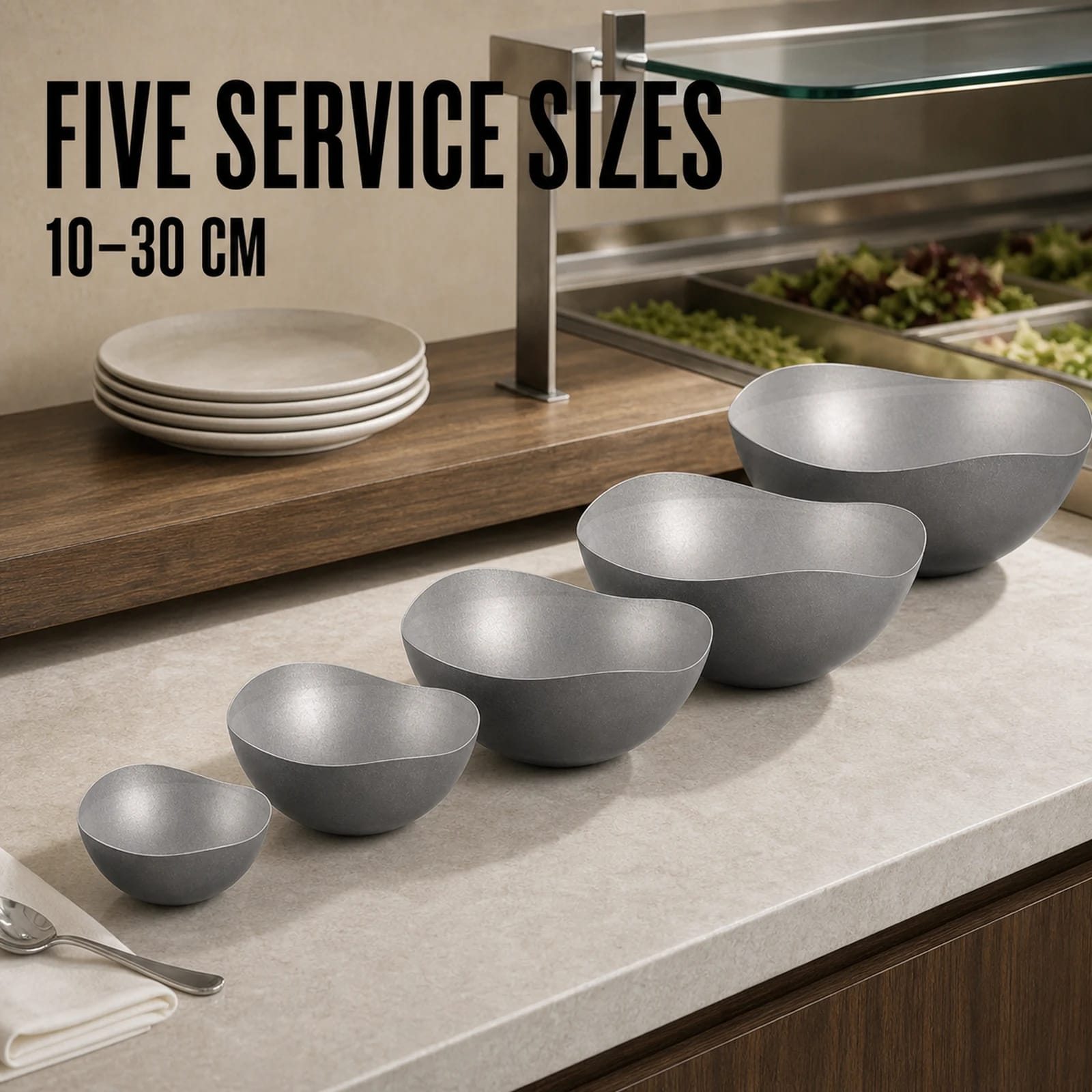
For hospitality use, a series usually offers more flexibility than a single-size bowl. Smaller pieces can support garnish, toppings or individual presentation, while wider bowls can be positioned as focal points for fruit, salads or shared dishes. For reference, our range includes four-lobe irregular rim bowl series and three-lobe irregular rim bowl series as standard production options.
The Vintage Snowflake Gray Irregular Rim Stainless Steel Bowl Series is offered in five nominal sizes: 10 cm, 15 cm, 20 cm, 25 cm and 30 cm. The published specification table also lists the opening, height, unit weight, quantity per carton and carton size for each option.
| Nominal size | Opening | Height | Unit weight | Qty/carton |
|---|---|---|---|---|
| 10 cm | 10.0 cm | 4.8 cm | 85 g | 120 |
| 15 cm | 15.0 cm | 6.5 cm | 188 g | 80 |
| 20 cm | 20.0 cm | 8.8 cm | 335 g | 50 |
| 25 cm | 25.2 cm | 10.8 cm | 530 g | 30 |
| 30 cm | 30.5 cm | 13.5 cm | 800 g | 20 |
The figures are useful for a first layout discussion, but they are not a substitute for a buyer’s own service plan. A purchasing team should still confirm the required capacity, selected sizes and quantity mix against the menu and counter layout.
Evaluate the silhouette from the guest’s point of view
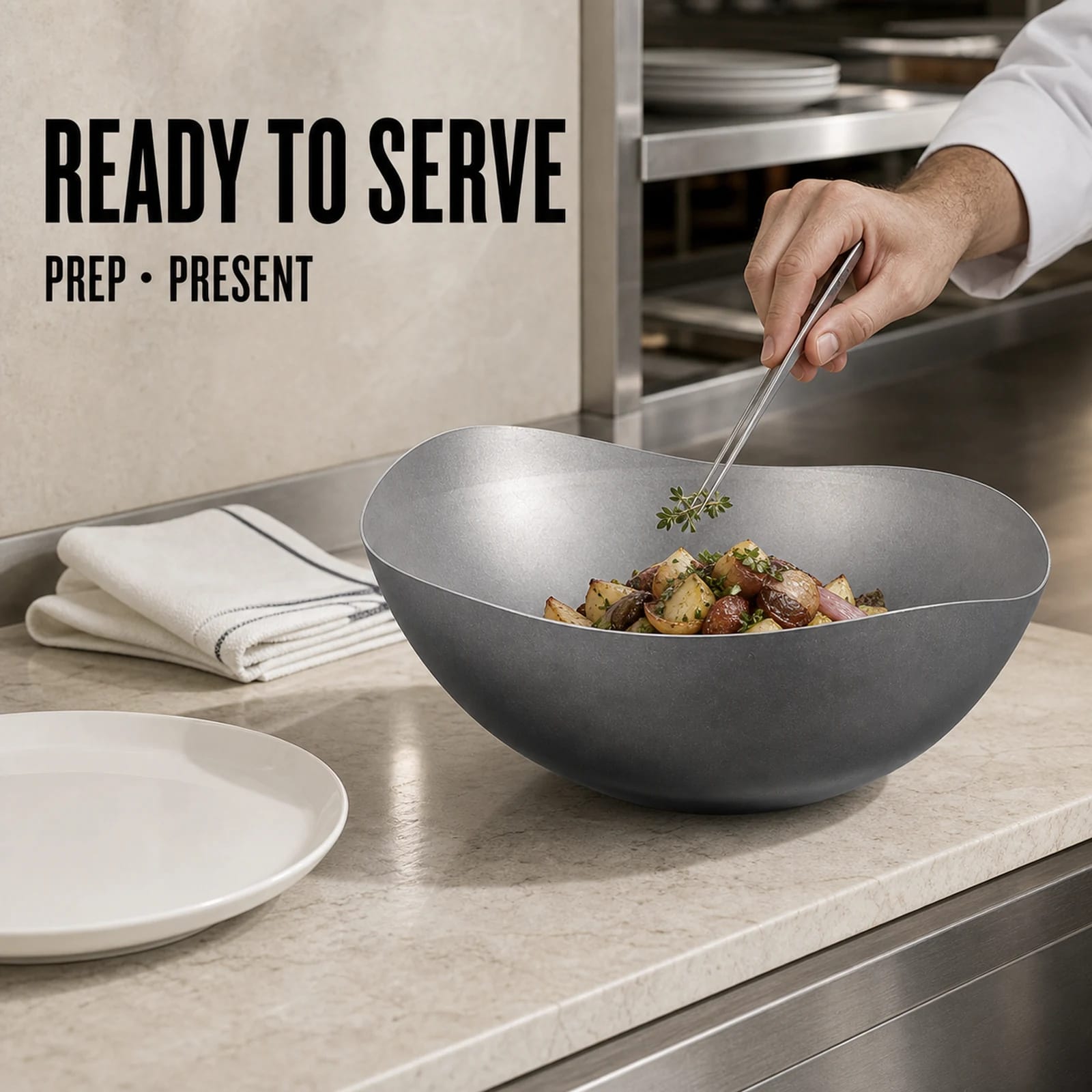
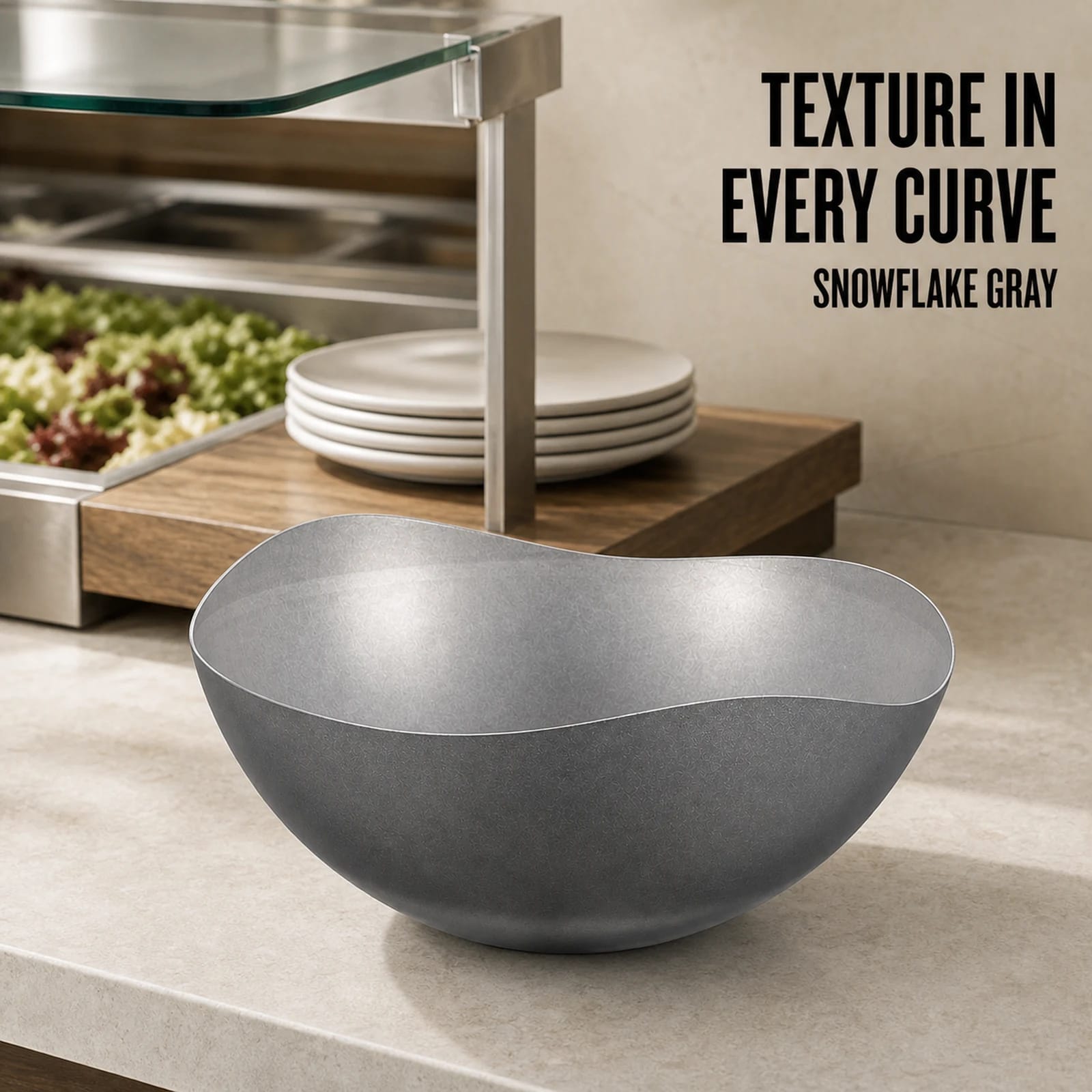
The bowl profile affects the presentation even before food is added. A plain round bowl may blend into the line; a more sculptural edge can create a deliberate visual point without needing separate display hardware.
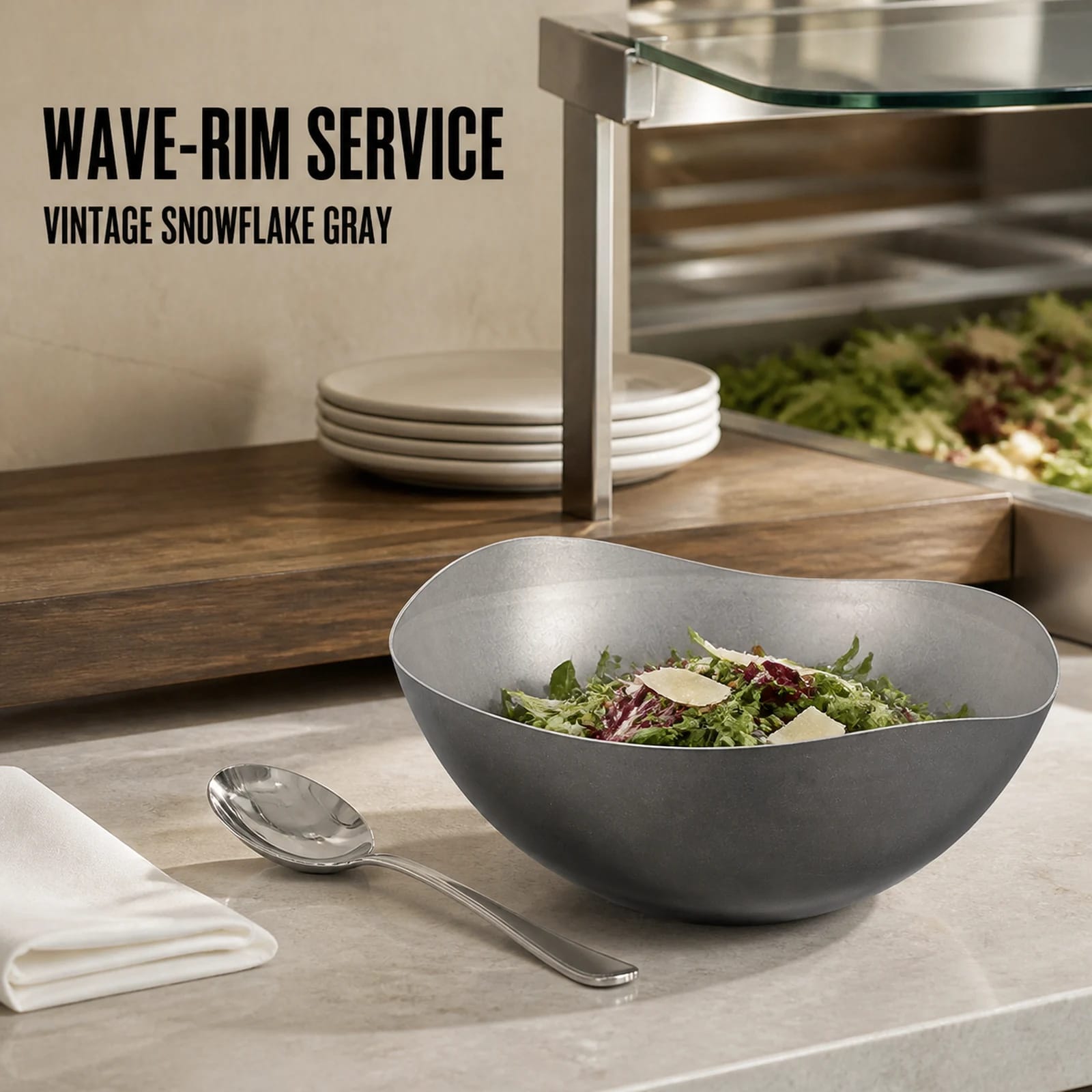
This series uses an irregular wave rim and a low-gloss snowflake-gray finish. Its visible finish and edge treatment make it relevant for hotel buffet, restaurant pass and catered presentation settings where the tableware needs to be part of the display.
When reviewing a design like this, ask for images that show:
- the full bowl from above and at table height;
- the rim profile and edge continuity;
- the finish in neutral light;
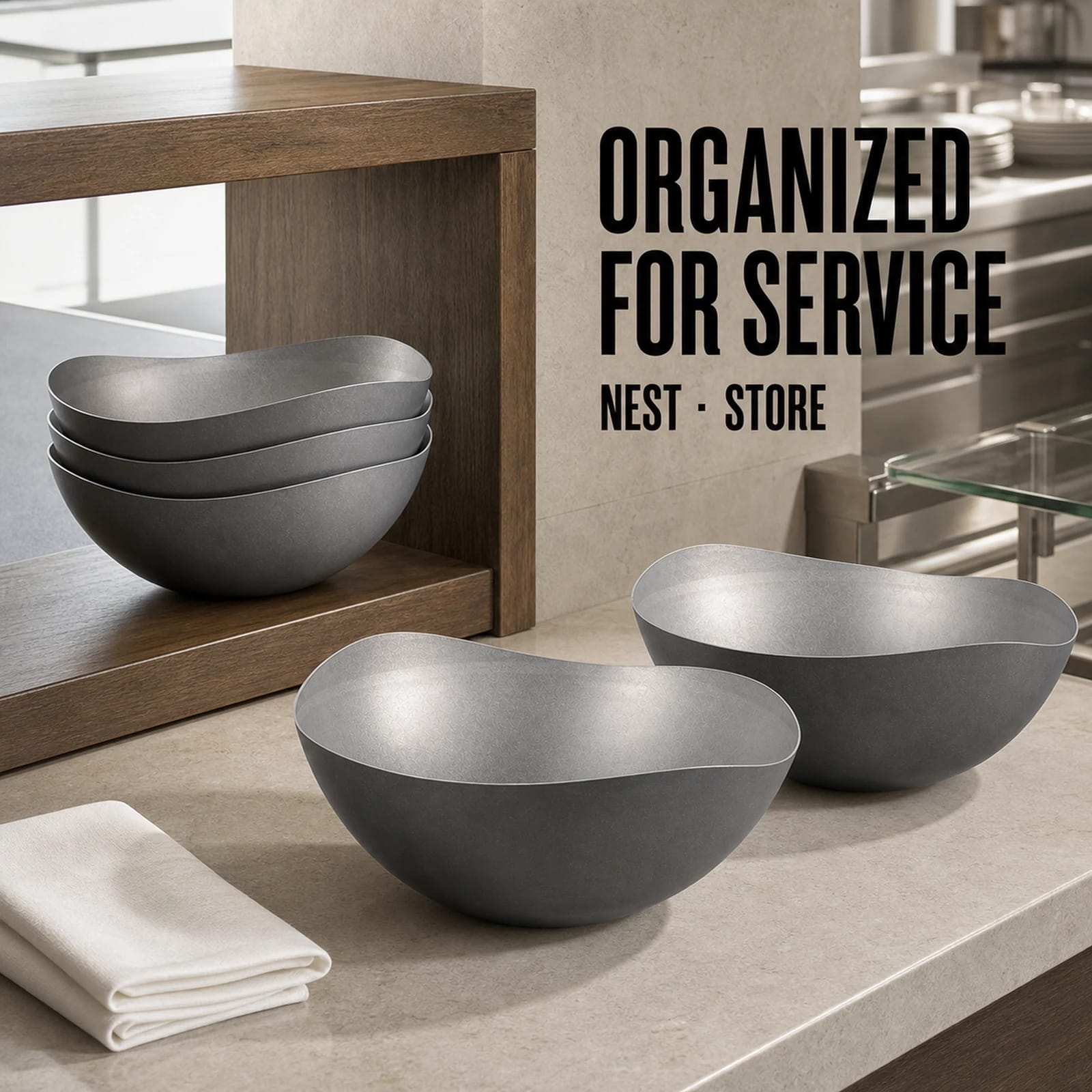
- several sizes shown together;
- the product in an actual service setting.
Photos should support the design decision, not replace the technical review. A shape that looks strong in a studio image may still require a size and layout check for the intended counter.
Match the bowl to the flow of service
A bowl series should also be reviewed as part of a working line, not as isolated tableware. Start by mapping the guest journey: where staff replenish food, where guests serve themselves, and where visual height is needed to separate one dish from another.
A compact bowl may suit toppings or individual portions. A mid-size bowl can support salads, fruit or side dishes. A larger piece may act as a stronger visual anchor on the line. The exact assignment depends on the menu, serving utensils and replenishment routine, so buyers should request samples or confirm the selected sizes against their own setup.
The rim shape matters here as well. An irregular wave profile gives the collection a more sculptural outline than a conventional round rim, but a buyer should still assess handling, cleaning procedure and the intended placement before finalising an order. Use the product images to assess appearance, then use confirmed dimensions and a sample to assess operational fit.
Treat packing information as a purchasing input
Packing is frequently left until the last stage of a quotation. For distributors, hotel projects and repeat orders, that is too late. Carton quantity and dimensions affect warehouse planning, order consolidation and the cost of moving products through the supply chain.
For this bowl series, the published product page provides carton data per size. That allows a buyer to begin planning the mix before the supplier prepares a final quotation. For example, a 10 cm bowl is listed at 120 pieces per carton, while a 30 cm bowl is listed at 20 pieces per carton.
Before confirming an order, request written confirmation of:
- the selected size mix;
- inner packing and protective materials;
- final carton dimensions and gross weight;
- labelling requirements;
- any logo, packaging or custom presentation requirement.
Yorkers International provides full OEM/ODM support for logo, packaging and design. The exact specification and commercial terms should be agreed for the selected order, rather than assumed from a general product listing.
Ask the technical questions that the product page does not answer
A good product page speeds up sourcing, but a serious buyer should not infer missing facts. The current source material for this bowl series identifies it as stainless steel and supplies the dimensions and carton data above. It does not state alloy grade, capacity, thickness, inner packing or required documentation as fixed product facts.
Those details should be asked and confirmed before purchase. A practical request-for-quote checklist includes:
- Which stainless steel grade is supplied for the selected version?
- What capacity and thickness apply to each selected size?
- What inner packing is included?
- What finish variations, logo options or packaging customisation are available?
- Which test reports can be supplied for the order as requested?
- Can the buyer arrange a third-party factory inspection before shipment?
Yorkers International manufactures stainless steel tableware, kitchenware and hotel supplies in Shenzhen, China, and exports to more than 50 countries. Test reports can be provided per order as requested, and third-party factory inspection is welcome.
Build a bowl range, not a one-off purchase
The best commercial result usually comes from a coherent range. Buyers can use one collection to create a consistent visual language across a buffet, restaurant presentation or hospitality catalogue. The five-size format of this bowl series supports that approach: choose the sizes needed for the menu rather than forcing every use into one bowl.
For distributors, this can also create a clearer assortment story:
- a compact size for smaller presentation needs;
- mid-size options for everyday service;
- larger bowls for more prominent buffet or restaurant placement;
- one finish direction that ties the assortment together.
The product range should be validated against the buyer’s own market and service context. The visible design is a starting point; the final purchase decision should be based on confirmed specifications, samples and the required packing plan.
For project orders, keep the same decision record with the quotation: selected sizes, planned application, requested finish, packing requirements and the technical points still awaiting confirmation. This creates a clear reference for both the buyer and supplier before production, packing, final sampling or shipment discussions move forward. It also reduces avoidable follow-up questions during the order process.
Final checklist before you request a quote
Use this short checklist when comparing stainless steel buffet bowls:
- The intended food and service role are defined.
- The required size mix is selected.
- Opening, height, unit weight and carton data have been reviewed.
- Finish and rim profile have been checked in clear product images.
- Alloy grade, capacity, thickness and packing have been requested in writing.
- Custom logo, packaging or design requirements are specified.
- Required test reports and inspection arrangements are discussed before order confirmation.
Need a buffet-bowl quotation or sample plan?
The Vintage Snowflake Gray Irregular Rim Stainless Steel Bowl Series offers five published sizes for hotel buffet and restaurant presentation. Share your preferred sizes, application and packing requirements with Yorkers International, and the team can help prepare the appropriate product and quotation discussion.
👉 Request a quote or sample discussion
Build your product shortlist
Review the product specifications, packing data and quotation checklist before requesting samples or commercial terms.
Wholesale Irregular Stainless Steel Bowls — specifications and wholesale quote
For order quantities, sampling and quotation preparation, read the stainless steel tableware wholesale guide: MOQ, pricing and lead time.