A tiered stand does one thing a flat tray cannot: it builds height. On a hotel buffet, an afternoon-tea table or a banquet display, vertical presentation draws the guest’s eye first and separates the display from the counter around it. For a hospitality buyer, however, choosing a three-tier fruit plate involves more than picking an attractive silhouette. The height, tier layout, material grade and packing data all determine whether the stand works on a real service line.
This guide gives hotel, restaurant and catering buyers a practical checklist for sourcing three-tier display stands. It also uses the 304 Three Layer Triangular Ribbed Fruit Plate from Yorkers-intl as a concrete example of how to evaluate a tiered stand before requesting a quote.
Start with the display role, not the product photo
Before comparing finishes, define where the stand will be placed and what it must do. A breakfast buffet fruit station, a pastry counter and a banquet centerpiece do not need the same footprint or the same visual weight.
A useful sourcing brief answers five questions:
- What will each tier hold? Fruit, pastries, desserts or tea refreshments determine the working length and width and usable depth of each plate.
- Where will the stand sit? Counter depth, table size and guest traffic define the maximum footprint and height.
- How many stands are needed per station? A single anchor piece and a repeated row create different ordering quantities and packing plans.
- What visual direction does the venue require? A formal banquet, a modern hotel buffet and a casual teahouse do not need the same profile.
- How will the goods be shipped and stored? Unit weight, sets per carton and carton dimensions matter before an order is placed.
This sequence prevents a common procurement mistake: selecting one attractive stand image first, then discovering that its height does not fit the display shelf or that its packing does not suit the order volume.
Understand the tier layout before ordering
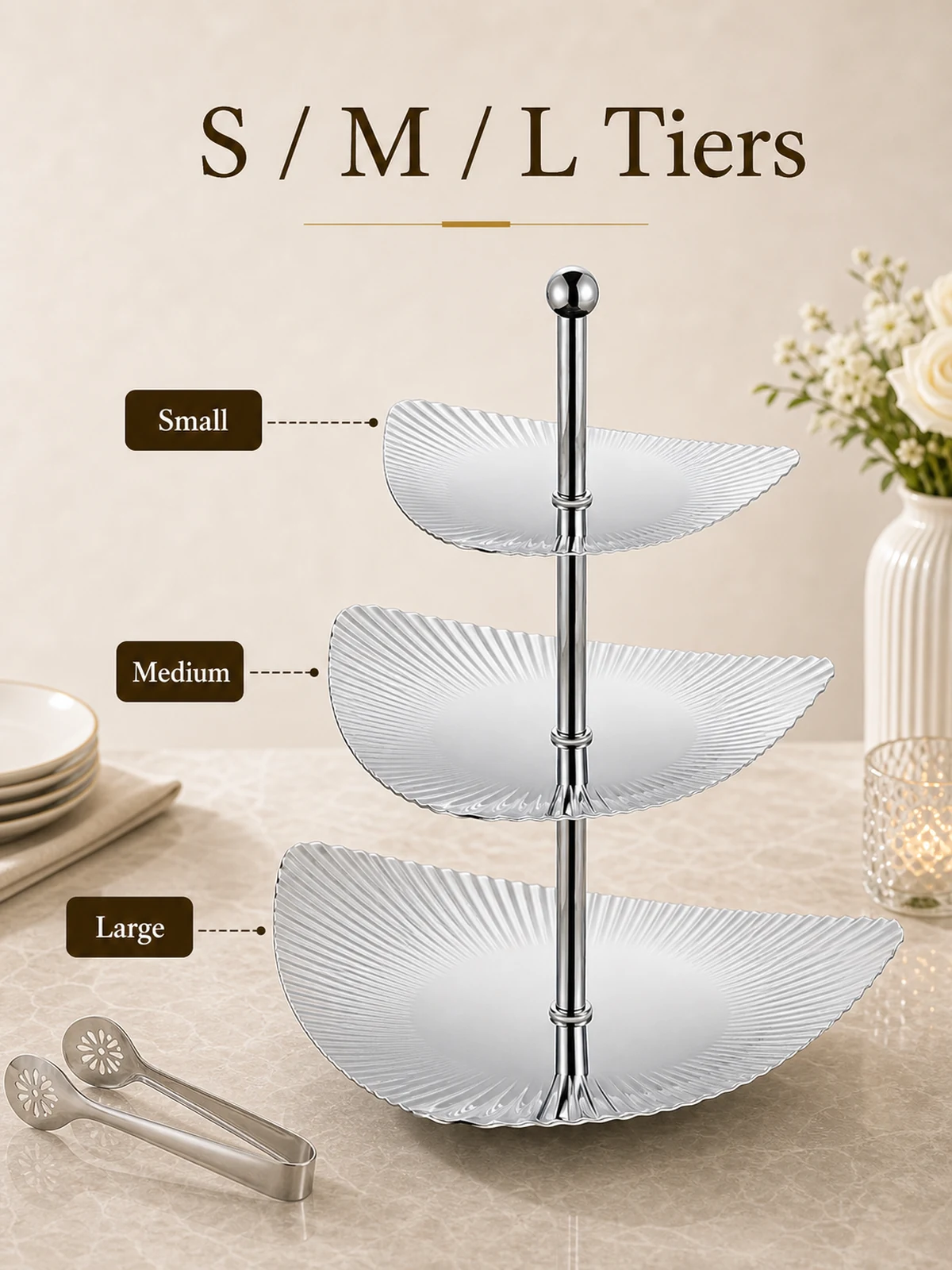
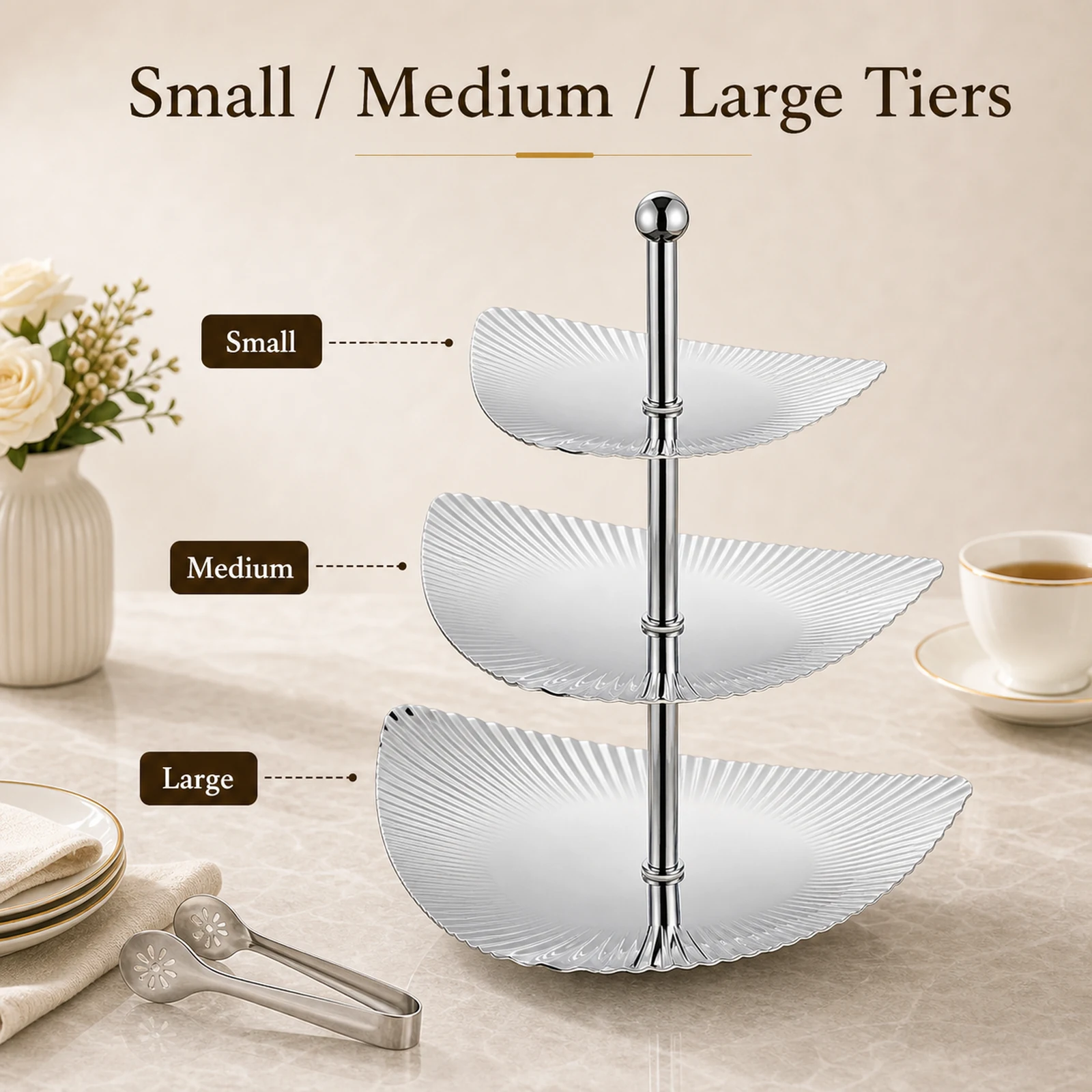
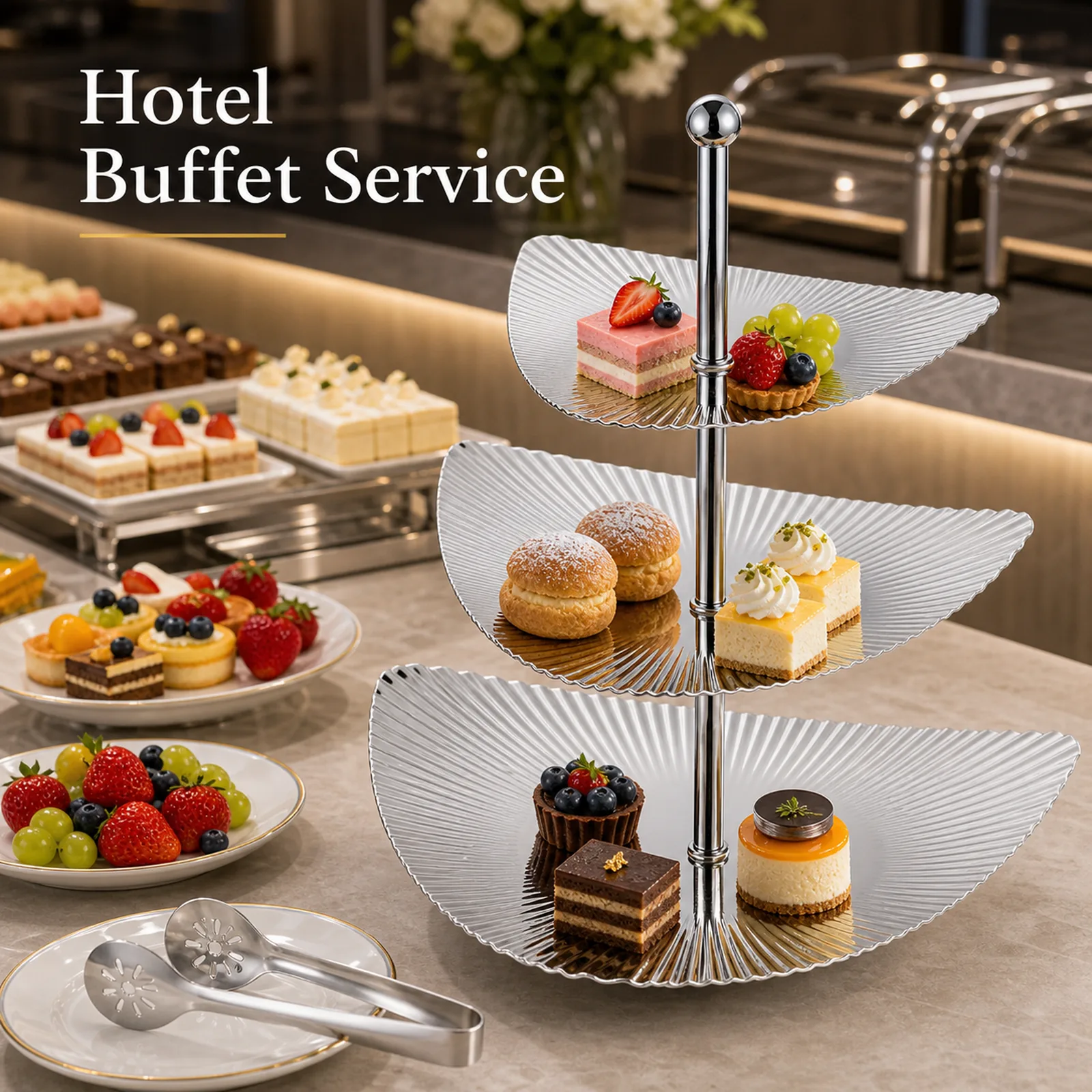
A three-tier stand is a system of three plates at different heights around a central column, not simply one plate repeated three times. Each level has a specific merchandising role:
- Top tier (small plate): the visual peak. Best for accent fruit, garnish or small pastries that draw attention without needing volume.
- Middle tier (medium plate): the working level. Suited to sliced fruit, cookies or tea refreshments that guests reach for most often.
- Bottom tier (large plate): the volume base. Use the largest lower plate as the visual base; confirm safe loading and stability for the intended service arrangement.
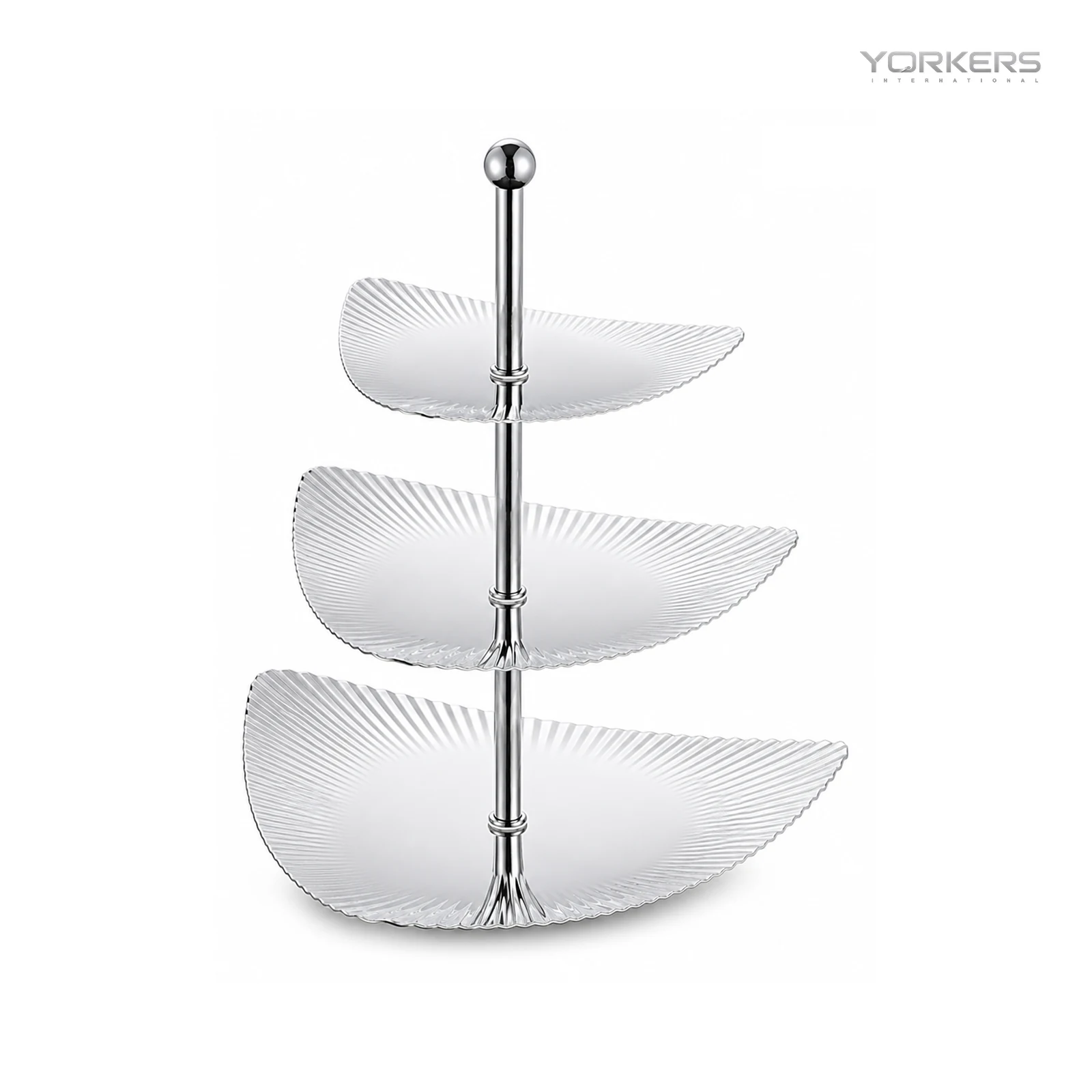
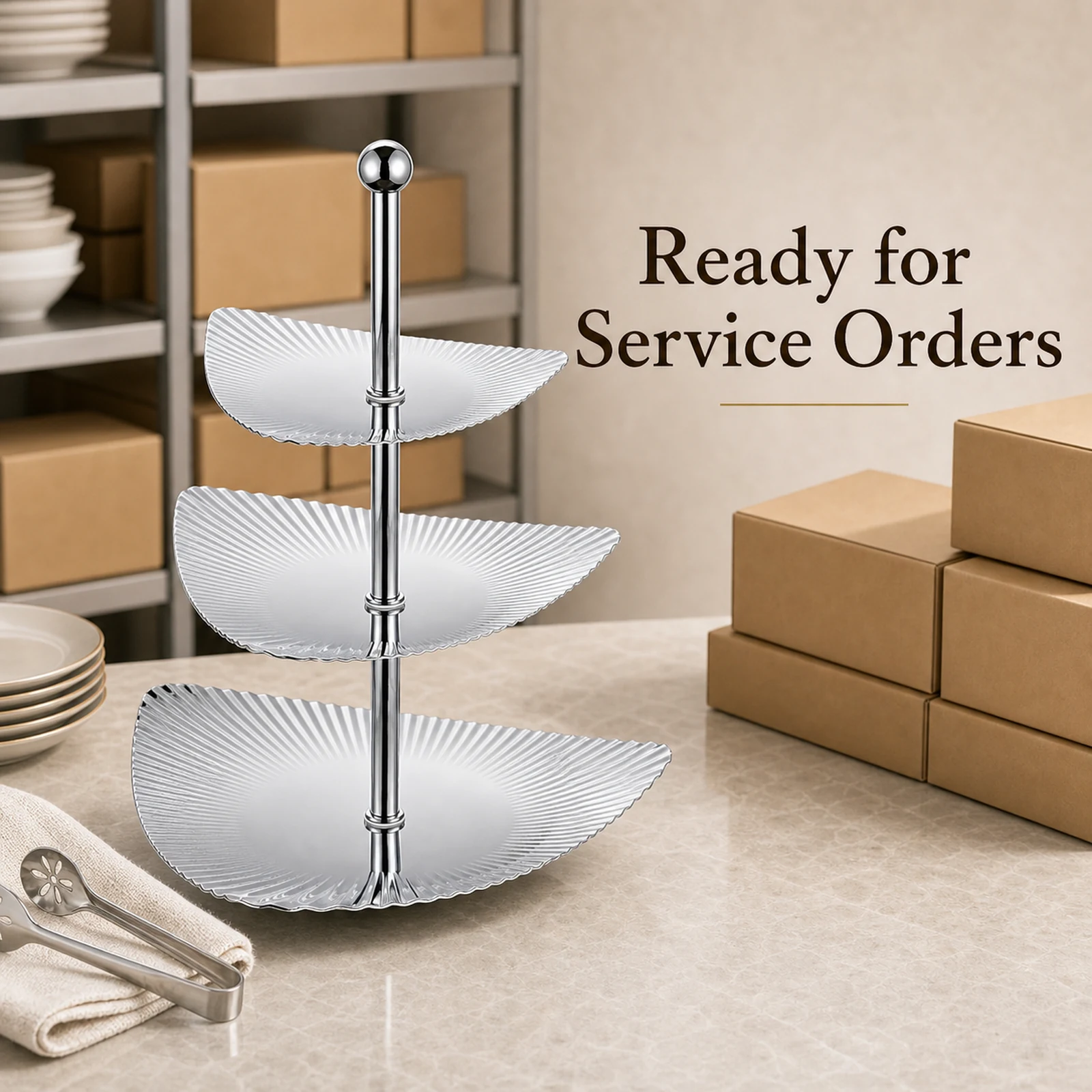
For the 304 Three Layer Triangular Ribbed Fruit Plate, the published product page lists a small top plate, a medium middle plate and a large bottom plate on a center-column structure, with a total height of 32 cm and a tier spacing of 10.3 cm per level.
| Specification | Published value |
|---|---|
| Structure | Center column, three triangular ribbed plates |
| Tier layout | Top: small · Middle: medium · Bottom: large |
| Total height | 32 cm |
| Tier spacing | 10.3 cm × 3 levels |
| Unit weight | 1652 g/set |
| Quantity per carton | 10 sets |
| Carton dimensions | 62 × 35 × 34 cm |
The tier spacing deserves particular attention. The listed 10.3 cm layer spacing is a starting point for planning, not a guarantee that a particular pastry or fruit arrangement will fit. Buyers planning taller items — such as stacked macarons, tall fruit arrangements or packaged goods — should confirm clearance against their own menu before ordering. The product page does not provide exact plate length and width for each tier; request these measurements in writing and check them against your intended contents before ordering.
Evaluate the geometry: why a triangular plate changes the display
Most tiered stands use round plates. A triangular plate presents differently in three practical ways:
- Visible facing. A triangular plate shows three flat faces to the guest. When the stand is angled deliberately on the counter, each face can face a different traffic direction.
- Defined plating zones. The three corners create natural portioning zones for color separation — for example, three fruit types per tier with clear boundaries.
- Ribbed surface texture. The ribbed, or striped, plate surface adds light play and a sense of hand-crafted quality that a flat mirror polish does not provide, while remaining part of a polished SUS304 structure.
When reviewing any tiered design, ask the supplier for images that show:
- the full stand from the front and from above at table height;
- each tier individually, to judge the usable surface;
- the ribbed texture in neutral light;
- the center column joint and base;
- the stand in an actual buffet or pastry display.
Photos support the design decision; they do not replace the technical review. A silhouette that photographs well still needs a footprint, height and clearance check against the real counter.
Match the stand to the service setting
A three-tier fruit plate is a versatile piece across food service, but its role shifts by venue:
- Hotel breakfast and buffet fruit stations: the primary use. Use the graduated tiers to organize a visible fruit display; validate replenishment access and permitted loading for the intended arrangement.
- Afternoon tea and tea rooms: check the listed layer spacing against the height of the selected pastries, scones or serving pieces; the stand becomes the table centerpiece.
- Banquet and event displays: a 32 cm stand adds mid-height layering to a display table without requiring separate risers or props.
- Restaurant counter and bar displays: the triangular geometry gives a deliberate, modern facing where the stand is viewed from a fixed angle.
The exact assignment depends on the menu, replenishment routine and available surface. Buyers should request a sample or confirm dimensions against their own setup before finalizing quantities.
Treat material and packing information as purchasing inputs
Material. The supplied SKU reference identifies this stand as SUS304 stainless steel. The material designation alone does not establish corrosion performance or food-contact compliance for this product. For any specific market, buyers should confirm in writing which food-contact compliance documentation applies to the selected order.
Packing. For distributors and hotel projects, packing data is a purchasing input, not an afterthought. At 1652 g per set, 10 sets per carton and a carton of 62 × 35 × 34 cm, a buyer can estimate shipping volume and plan warehouse racking before requesting a quote. Before confirming an order, request written confirmation of:
- the selected quantity and any multi-stand discount structure;
- inner packing and protective materials between plates;
- final carton dimensions and gross weight;
- labelling requirements;
- any logo, packaging or custom presentation requirement.
Ask Yorkers-intl which logo, packaging or design customization options can be supported for this specific model. The exact commercial terms — including MOQ, lead time and customization options — should be agreed for the selected order rather than assumed from a general product listing.
Ask the technical questions the product page does not answer
A good product page speeds up sourcing, but a serious buyer should not infer missing facts. For this stand, the published data covers the structure, height, tier spacing, weight and carton information above. It does not state each tier’s plate length and width, disassembly behavior, dishwashing procedure or required certification documents as fixed product facts.
A practical request-for-quote checklist includes:
- What is the diameter and usable depth of each of the three plates?
- Does the stand disassemble for cleaning, storage or packing?
- What inner packing is included between plates in the carton?
- What finish variations, logo options or packaging customisation are available?
- Which food-contact test reports can be supplied for the order as requested?
- Can the buyer arrange a third-party factory inspection before shipment?
Discuss the selected model and order requirements with Yorkers-intl. Ask which food-contact test reports and inspection arrangements can be provided for this order before making compliance or inspection commitments.
Build a display range, not a one-off purchase
A tiered stand works best as part of a coherent display vocabulary. Buyers can pair it with other stainless buffet pieces — bowls, risers, trays — in the same finish direction to create a consistent visual language across a buffet line or product catalogue. For distributors, a tiered fruit plate anchors a fruit-and-dessert presentation assortment that is easy to merchandise and easy to explain.
For project orders, keep the same decision record with the quotation: selected quantity, planned application, requested finish, packing requirements and the technical points still awaiting confirmation. This creates a clear reference for both buyer and supplier, and reduces avoidable follow-up questions during the order process.
Final checklist before you request a quote
Use this short checklist when comparing three-tier fruit plates:
- [ ] The intended display role and venue are defined.
- [ ] Total height (32 cm) and tier spacing (10.3 cm × 3) fit the intended counter and contents.
- [ ] Plate length and width for each tier has been requested and checked against the menu.
- [ ] The ribbed triangular design has been reviewed in clear product images.
- [ ] MOQ, lead time and customization options have been confirmed in writing.
- [ ] Food-contact compliance documentation for the selected order has been requested.
- [ ] Carton quantity (10 sets), unit weight (1652 g) and carton dimensions (62 × 35 × 34 cm) have been reviewed against the shipping plan.
Need a three-tier display quotation or sample plan?
The 304 Three Layer Triangular Ribbed Fruit Plate is built in polished SUS304 with a center-column three-tier structure for hotel buffet, pastry and banquet display. Share your target quantities, application and packing requirements with Yorkers-intl, and the team can help prepare the appropriate product and quotation discussion.