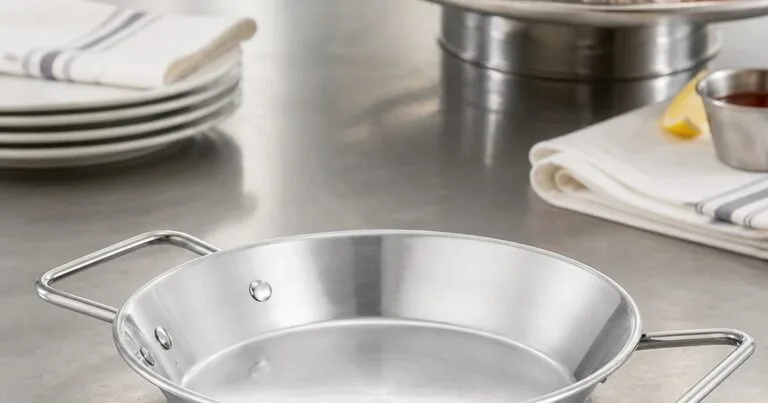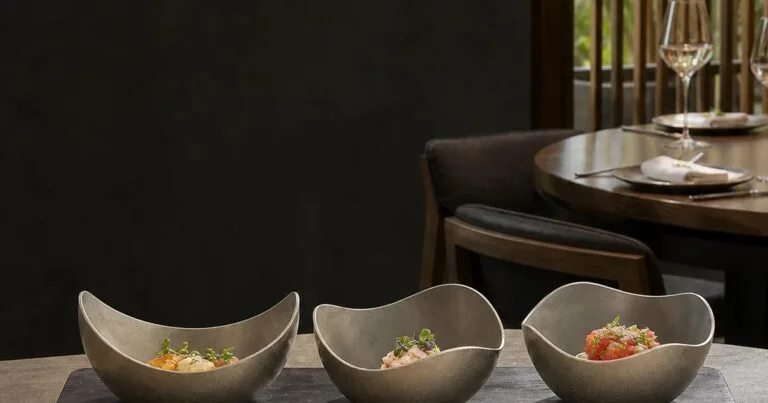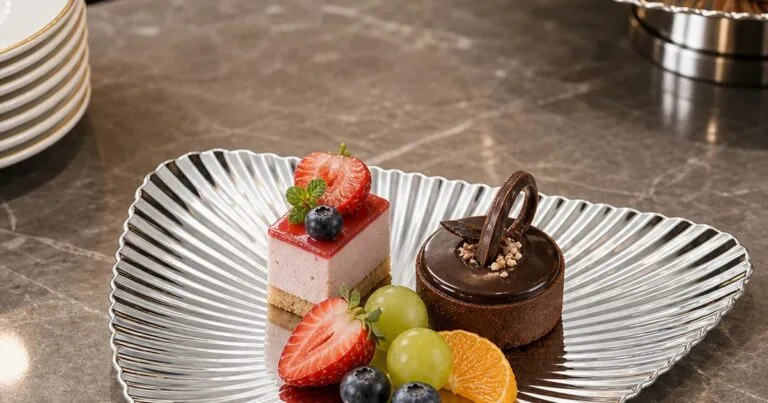
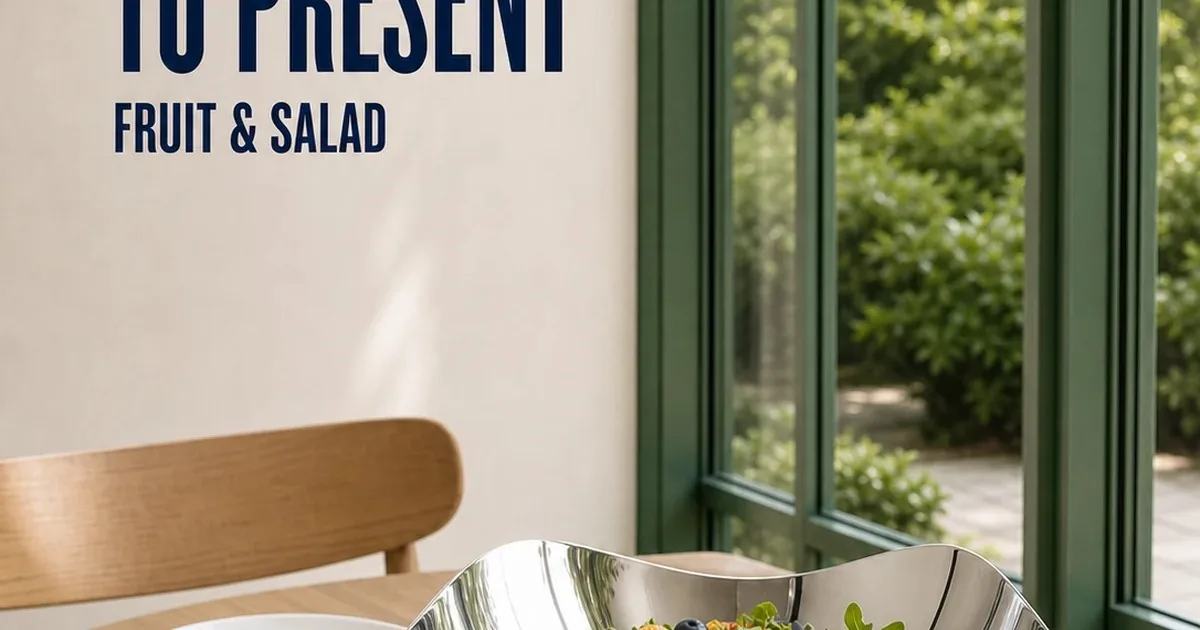
Some bowls are bought for the kitchen. This series is bought for the table. The four-lobe serving bowl — a low, broad form with four softly raised rim sections and a mirror-polished surface inside and out — is a front-of-house piece: fruit displays at hotel breakfast, shared salads on a buffet line, banquet table service where the vessel itself is part of the presentation.
For hotel F&B teams, banquet operators and distributors, buying a display bowl series is a different exercise from buying prep ware. This guide walks through what matters when evaluating the Mirror-Polished Four-Lobe Stainless Steel Serving Bowl Series (SKU YK-4LB-MP), and what to confirm before requesting a quote.
Start with the service, not the shape
A four-lobe bowl is a presentation decision before it is a purchasing decision. Before comparing products, define where each bowl will appear on the floor:
- Which course or station will the bowl serve? Fruit at breakfast, salads on a buffet, condiments at a shared table — each implies a different size class.
- How visible is the piece? Mirror polish reads differently under breakfast lighting than in a dim banquet room; it reflects the surrounding table setting, which is the point.
- How often does it cycle through dishwashing? A display piece that turns over every service needs a finish that survives commercial handling.
- Where does it live between services? The series can be nested when not in use, which reduces the storage footprint of a multi-size inventory.
This prevents the most common mistake in display-ware procurement: choosing one striking bowl first, then discovering the rest of the series — or the packing data behind a volume order — does not fit the operation.
Read the shape: four lobes, low profile, broad opening
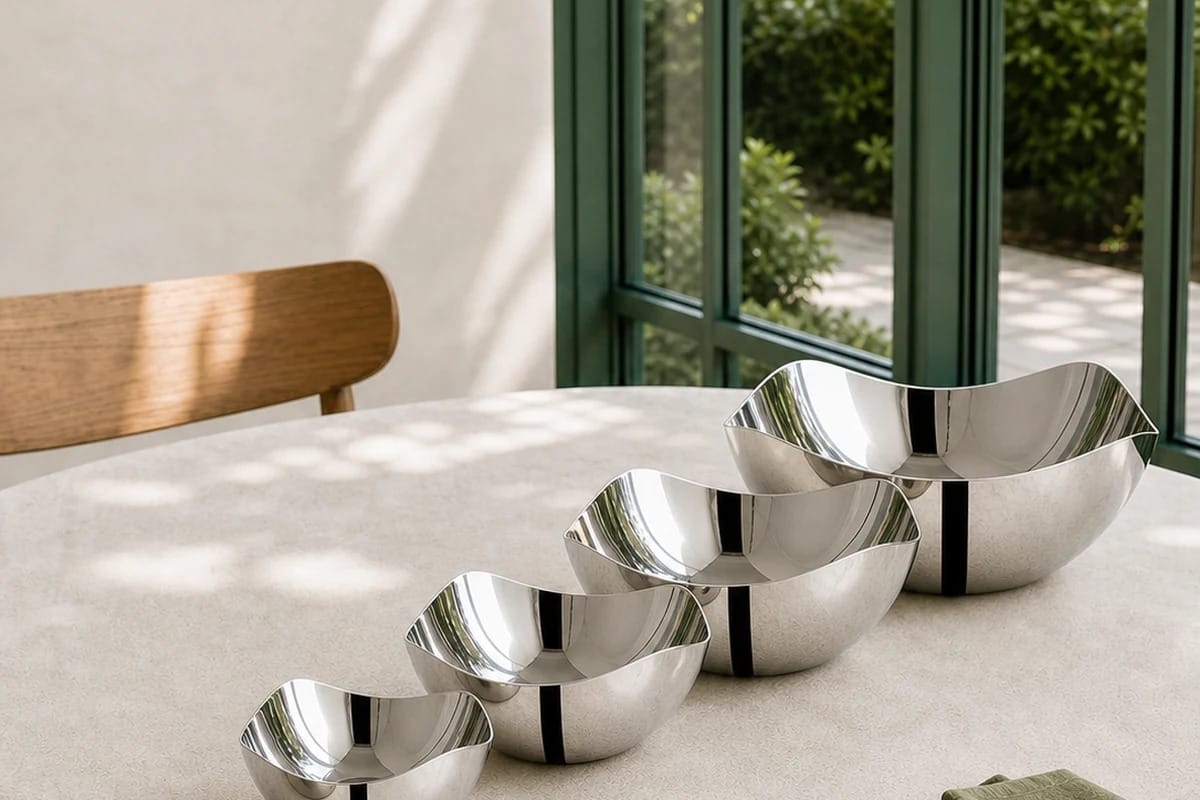
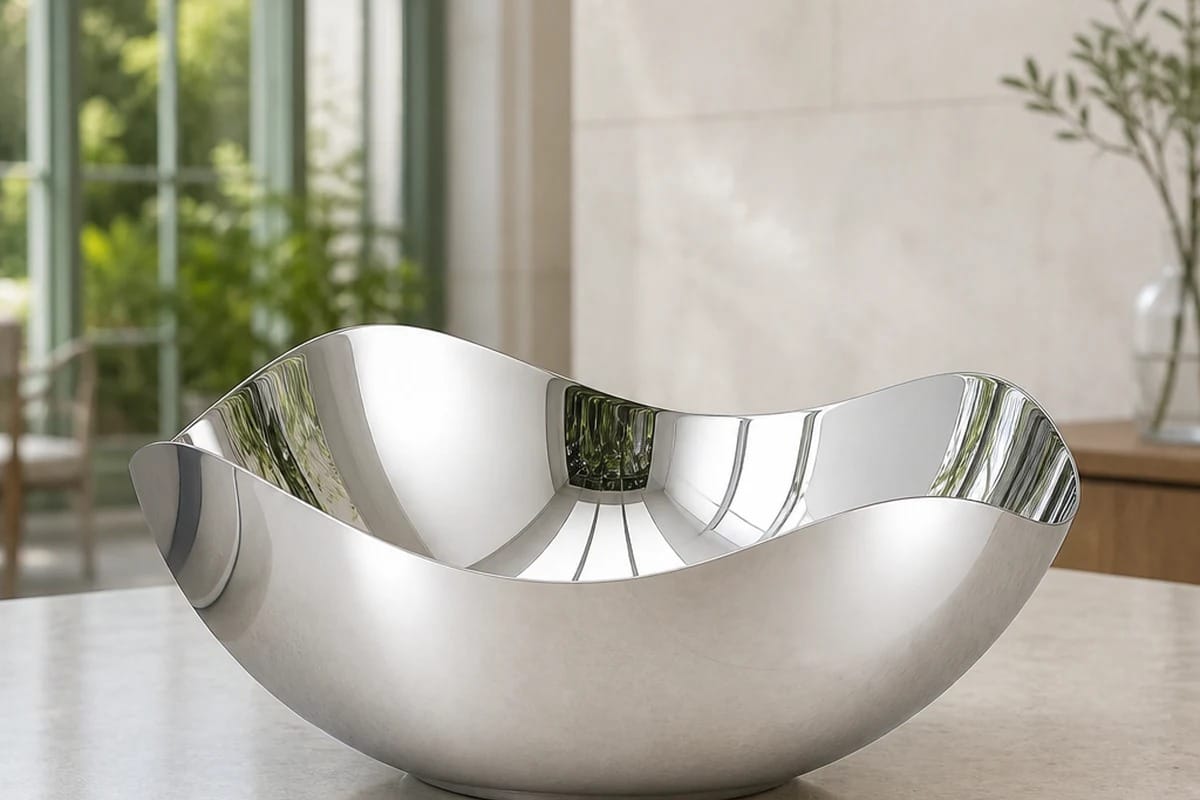
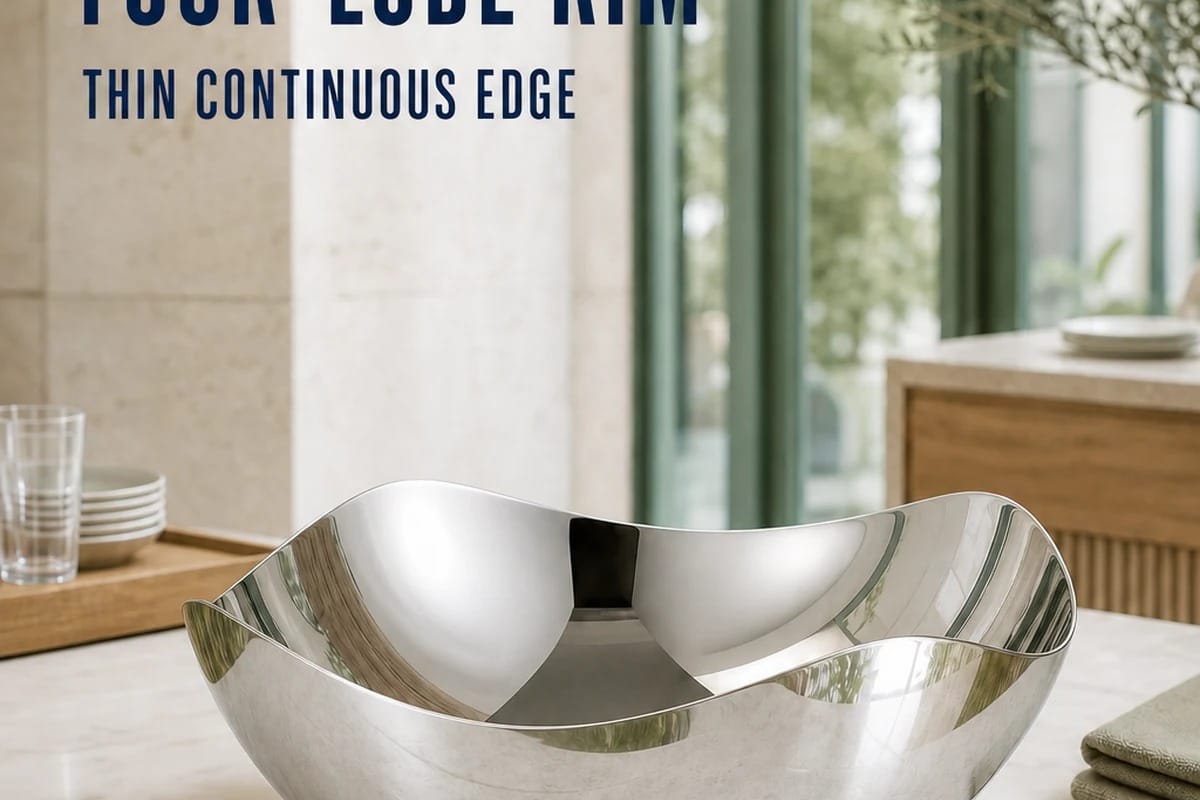
The silhouette of this series is deliberately recognizable. Four softly raised rim sections break the circle of an otherwise low, broad bowl, giving the opening a sculptural rhythm that stands out on a buffet line. There are no handles, lids or added attachments — the form itself is the design.
For buyers, the geometry has three practical consequences:
- Presentation recognition. The four-lobe profile creates a distinctive front-of-house look that guests notice — useful for venues building a recognizable table identity.
- Open visibility. The low, wide opening presents fruit and shared salads clearly, so portions and freshness are visible at a glance.
- Fewer failure points. No handles or welded attachments means fewer joints to fail under commercial dishwashing and high-turnover handling.
Ask the supplier how the raised rim sections are formed and finished, and request a sample to review the lobes under repeated commercial use — the rim transitions are where a pressed stainless form shows its quality.

Work through the five supplied sizes
The series runs five nominal sizes from 10 to 30 cm, each with published measured diameter, height, unit weight and carton data:
| Nominal size | Measured diameter | Height | Unit weight | Qty/carton | Carton size |
|---|---|---|---|---|---|
| 10 cm | 10.0 cm | 4.8 cm | 90 g | 100 | 24×24×27 cm |
| 15 cm | 15.0 cm | 6.5 cm | 200 g | 80 | 35×33×29 cm |
| 20 cm | 20.0 cm | 8.8 cm | 330 g | 50 | 45×24×25 cm |
| 25 cm | 25.2 cm | 10.8 cm | 605 g | 30 | 30×28×30 cm |
| 30 cm | 30.5 cm | 13.5 cm | 925 g | 20 | 35×33×29 cm |
Three observations for order planning:
- The 10 and 15 cm models are the condiment-and-individual-portion sizes. At 90 g and 200 g, they are light enough for a shared-table or room-service setting and pack densely — 100 and 80 pieces per carton.
- The 20 cm model is the working middle. At 330 g and 8.8 cm high, it serves individual salads and single-fruit presentations — likely the highest-volume SKU for à la carte programs.
- The 25 and 30 cm models are buffet anchors. At 605 g and 925 g, they carry the visual weight of a breakfast fruit display or a banquet salad station — and at 30 and 20 pieces per carton, they are the bulkiest items in the shipment plan.
Note that the series imagery uses representative bowls to show the range — the supplied measurements above, not the photos, are the measurement basis for your order. Capacity is not published for this series; if litre volume matters to your portion planning, request it in writing for the selected sizes.
Match the finish to the service reality
The published product data identifies a mirror-polished inner and outer surface. On the floor, that has a specific meaning: the bowl reflects its surroundings — the tablecloth, the lighting, the rest of the setting — which is exactly the effect front-of-house designers specify mirror stainless for.
For buyers, the finish raises confirmable questions rather than assumptions:
- Care procedure. Mirror polish shows water marks and fine scuffing more readily than brushed finishes; request the recommended care and dishwashing procedure for the selected order in writing.
- Surface durability. Ask how the polish holds up under commercial dishwashing cycles, and review a sample before committing a full program.
- Material evidence. The product data identifies the material as stainless steel. The exact alloy, thickness and compliance documentation should be confirmed with the supplier for the intended order before contractual use.
Between services, the graduated profiles can be nested to organize shelf space — confirm the selected size combination nests cleanly for your inventory before confirming the order.
Treat carton data as a purchasing input, not an afterthought
Packing is often left to the last stage of a quotation. For hotel projects and distributors, that is too late — carton quantity and dimensions differ per size and directly affect warehouse planning, order consolidation and freight cost.
Before confirming an order, request written confirmation of:
- the selected size mix and quantity per SKU;
- inner packing and protective materials between nested bowls;
- final carton gross weight and labelling;
- any logo, packaging or custom presentation requirement.
Yorkers International provides full OEM/ODM support for logo, packaging and design. The exact specification, MOQ, lead time and commercial terms should be agreed for the selected order rather than assumed from a general listing.
Ask the technical questions the product page does not answer
The published data for this series covers five sizes, measured diameters, heights, unit weights, carton quantities and carton dimensions. It does not fix the alloy grade, wall thickness, capacity, care procedure, inner packing, MOQ or lead time.
A practical request-for-quote checklist includes:
- What is the exact stainless steel alloy for the selected order, and what documentation verifies it?
- What wall thickness applies to the selected sizes?
- What is the recommended care and dishwashing procedure for the mirror finish?
- What inner packing is included, and how are bowls protected in transit?
- What MOQ, lead time and customization terms apply to the order?
Yorkers International manufactures tableware and hotel supplies in Shenzhen, China, and exports to more than 50 countries. Test reports can be provided per order as requested, and third-party factory inspection is welcome.
Build a display program, not a one-off purchase
The strongest commercial result comes from a coherent bowl program. A five-size four-lobe series lets one shape run from condiment service (10 cm) to buffet anchors (30 cm) with the same mirror finish, the same recognizable profile and the same care routine. For distributors, that creates a clear assortment position:
- one product family covering fruit, salad, condiment and shared-service presentations;
- carton formats scaled from dense (100/carton) to bulky (20/carton) for mixed shipments;
- an OEM/ODM path for branded versions of the same structure;
- a front-of-house design story — four-lobe profile, mirror reflection — that sells at the table, not just in the catalogue.
The final purchase decision should be based on confirmed specifications, samples and the required packing plan — the visible shape is the starting point, not the conclusion.
Final checklist before you request a quote
Use this short checklist when comparing four-lobe serving bowl series:
- [ ] The stations each size will serve are defined (condiment, fruit, salad, buffet).
- [ ] The size mix (10–30 cm) has been mapped to the venue’s presentation plan.
- [ ] The exact alloy and material documentation have been requested in writing.
- [ ] Mirror-polish care and dishwashing procedures match the venue’s maintenance plan.
- [ ] Unit weights, carton quantities and carton dimensions have been reviewed.
- [ ] Capacity, wall thickness, inner packing, MOQ and lead time have been requested in writing.
- [ ] Nested-storage and shelf-space plans have been checked for the size mix.
- [ ] Custom logo, packaging or design requirements are specified.
Need a four-lobe serving bowl quotation or sample plan?
The Mirror-Polished Four-Lobe Stainless Steel Serving Bowl Series offers five supplied sizes with published weights, heights and carton data for hotel and buffet programs. Share your application, quantities and packing requirements with Yorkers International, and the team can help prepare the appropriate product and quotation discussion.