
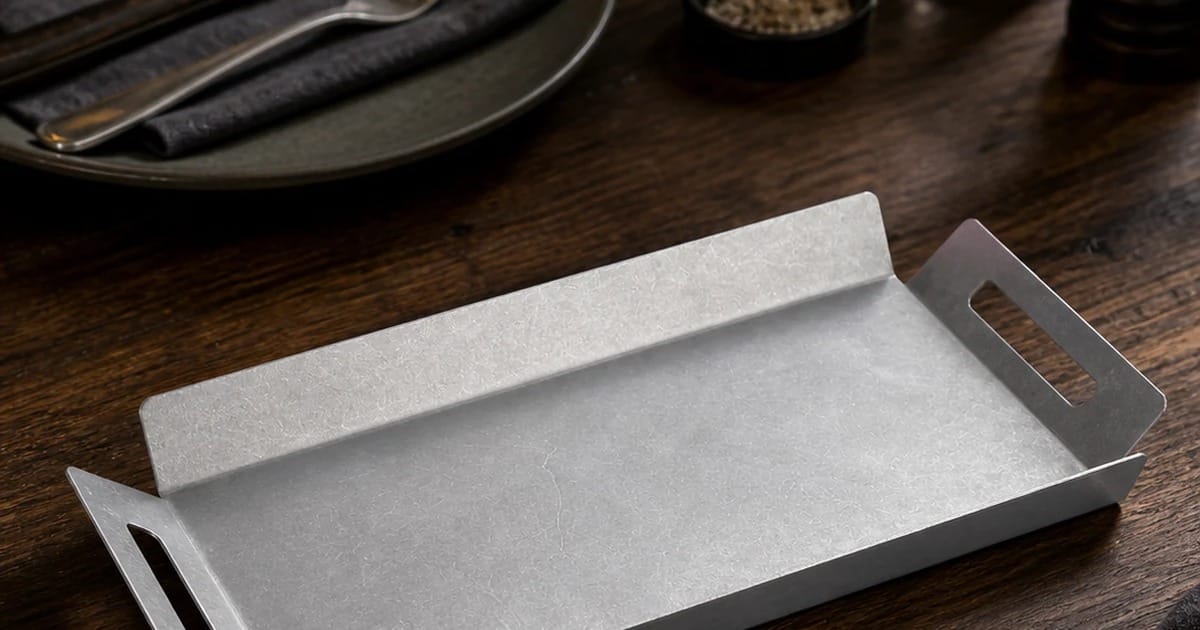
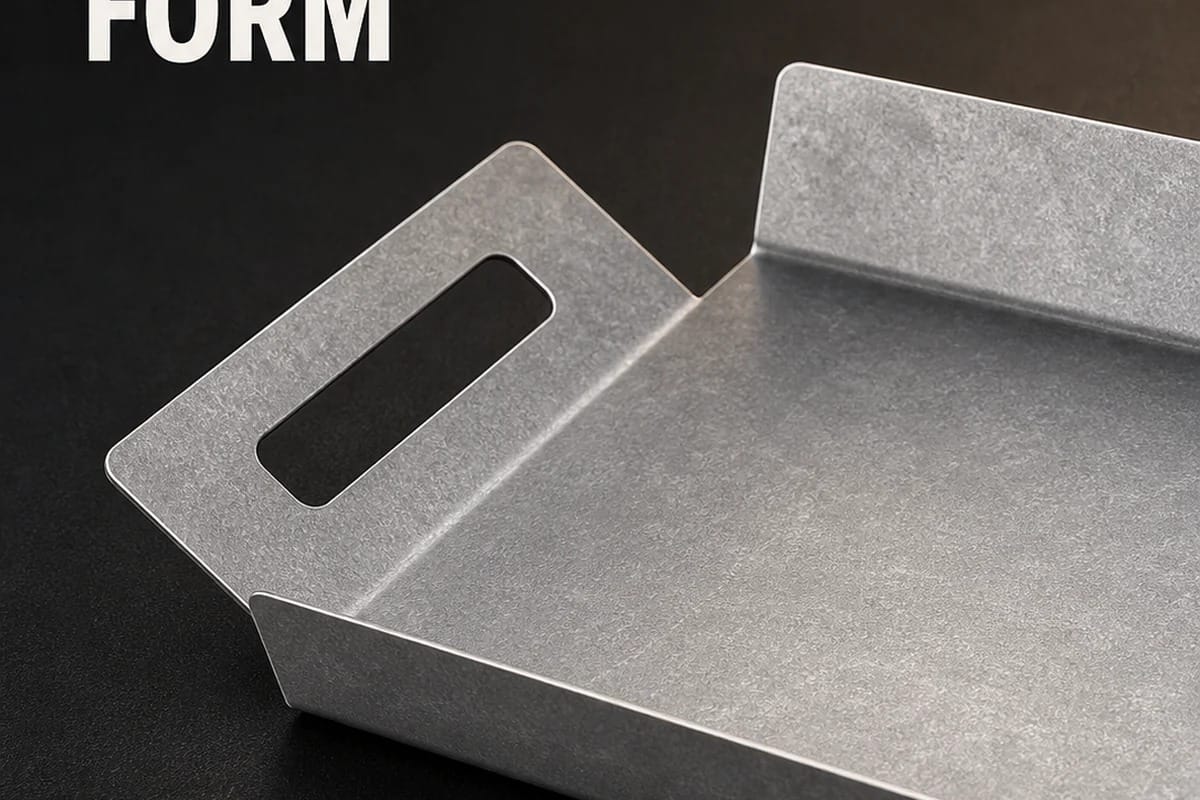
The American vintage serving tray — a wide rectangular bed, low folded side walls, cutout handles and a mottled snowflake-gray surface — has moved from diner nostalgia to a deliberate presentation choice in restaurants, bistros, cafes and hotel F&B. But for restaurant groups, hotel buyers and distributors, sourcing one is not a styling decision: it is a size-mix, material-verification and logistics decision.
This guide gives buyers a practical checklist for evaluating a vintage-style metal tray program before requesting a quote. It uses the American Vintage Metal Serving Tray as a concrete example of how to read a three-size tray series.
Start with the service scenario, not the tray
A serving tray earns its place at the table — or behind the counter — through the tasks it performs. Before comparing finishes, define where each tray will work:
- Which service style will the trays support? Guest-facing table service, counter and bakery display, banquet presentation, or back-of-house organization each imply a different size and quantity mix.
- What footprint fits the table or counter? A tray that overshoots a bistro table or a café counter creates service friction; the inner serving area matters as much as the outer dimensions.
- What material evidence is supplied? A vintage mottled surface is a finish, not a specification. The product sheet should state the metal type, alloy and surface treatment — or the buyer should request written confirmation.
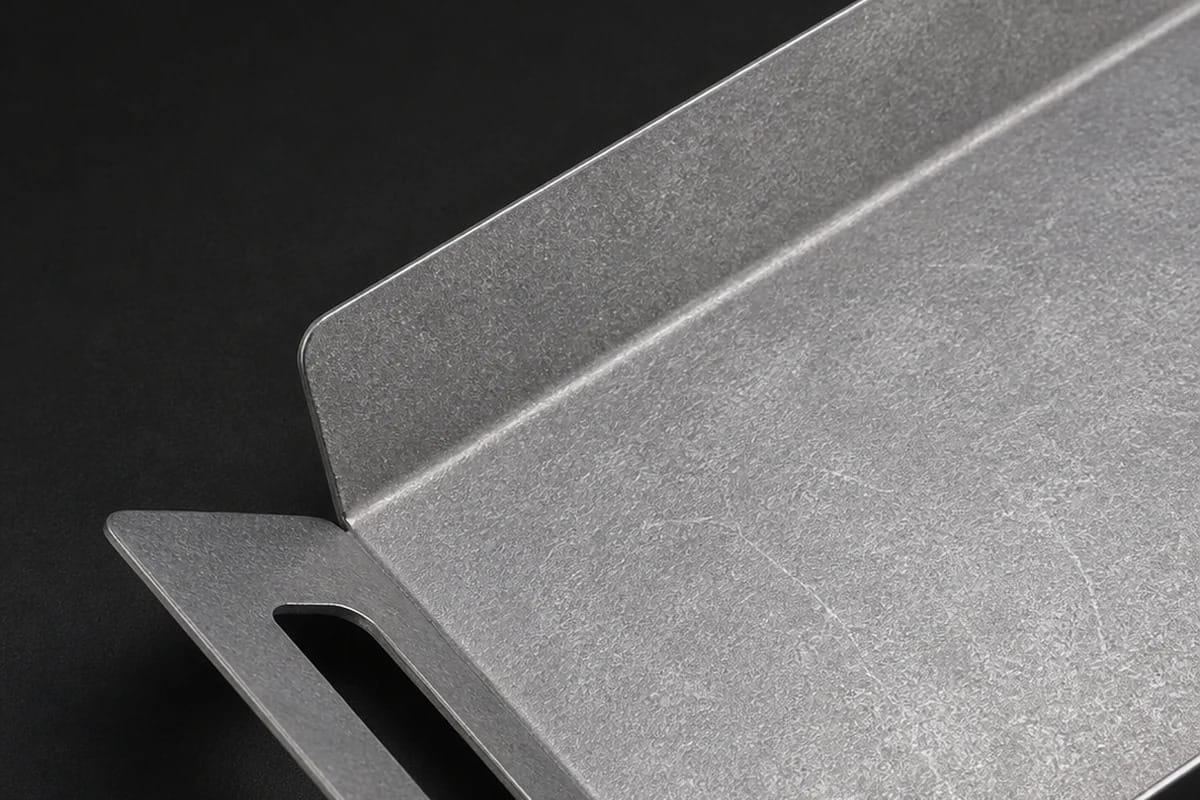
- What does the brand presentation require? The snowflake-gray mottled surface reads as vintage Americana; confirm it matches the venue’s broader tableware program.
- How will the goods be ordered and stored? Unit weight, carton quantity and packing format directly affect freight and warehouse planning.
Answering these questions first prevents the most common procurement mistake: ordering a striking display tray, then discovering the series behind it — or the data needed to support a volume order — does not fit the operation.
Read the shape: flat bed, folded walls, cutout handles
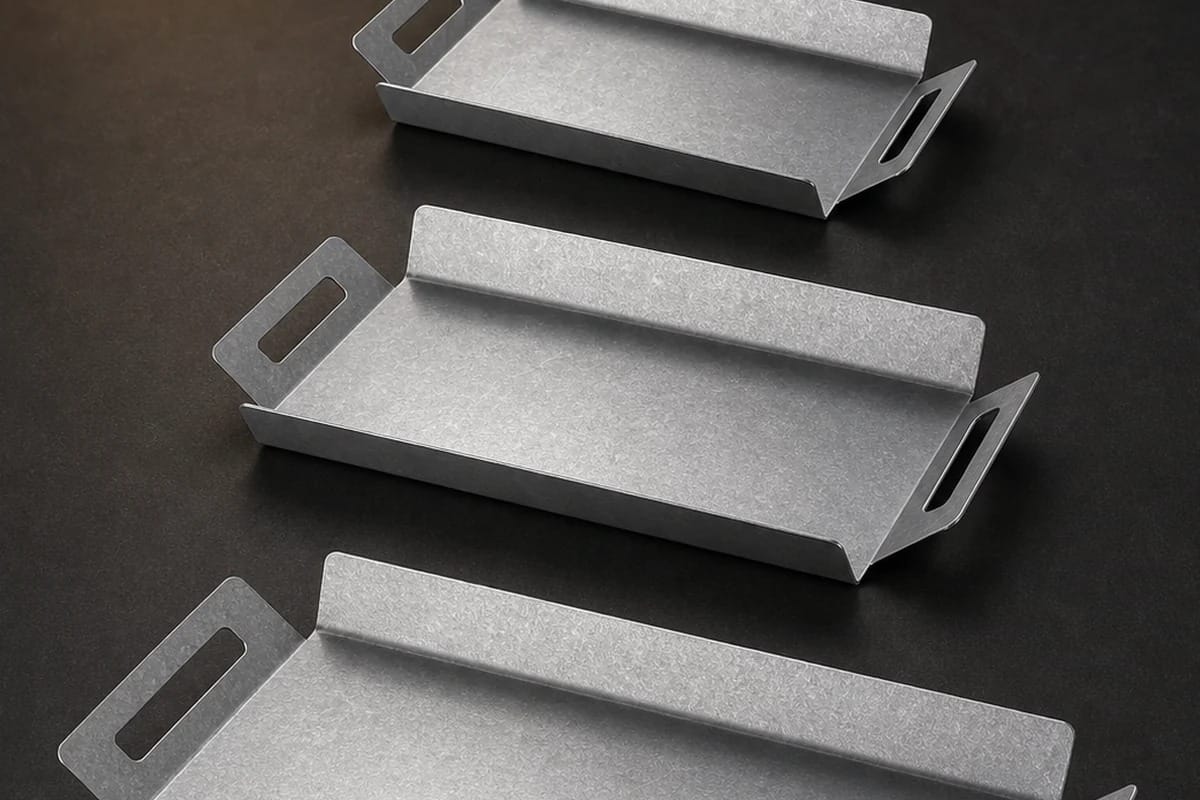
The silhouette of this series is functional vintage. A broad flat bed carries the items; low straight side flanges fold upward along the long sides, with open angular corner transitions that keep the rectangular footprint honest. Two outward handle ears — each with one elongated rounded-rectangle cutout opening — are integrated into the short ends, so staff can position a loaded tray with both hands and a firm grip.
For buyers, the geometry has three practical consequences:
- A true rectangular serving area. The low walls contain items without hiding them — pastries, tableware sets, coffee service and display merchandise stay visible to the guest.
- Integrated handles, no attachments. The cutout handles are formed into the tray body rather than welded on — fewer joints to fail under commercial handling and dishwashing.
- Open corners. The angular open corner transitions simplify cleaning and avoid the trapped debris of fully boxed corner seams.
Ask the supplier how the folded edges and cutout handle openings are finished, and request a sample to review the edges under repeated commercial use.
Work through the three supplied sizes
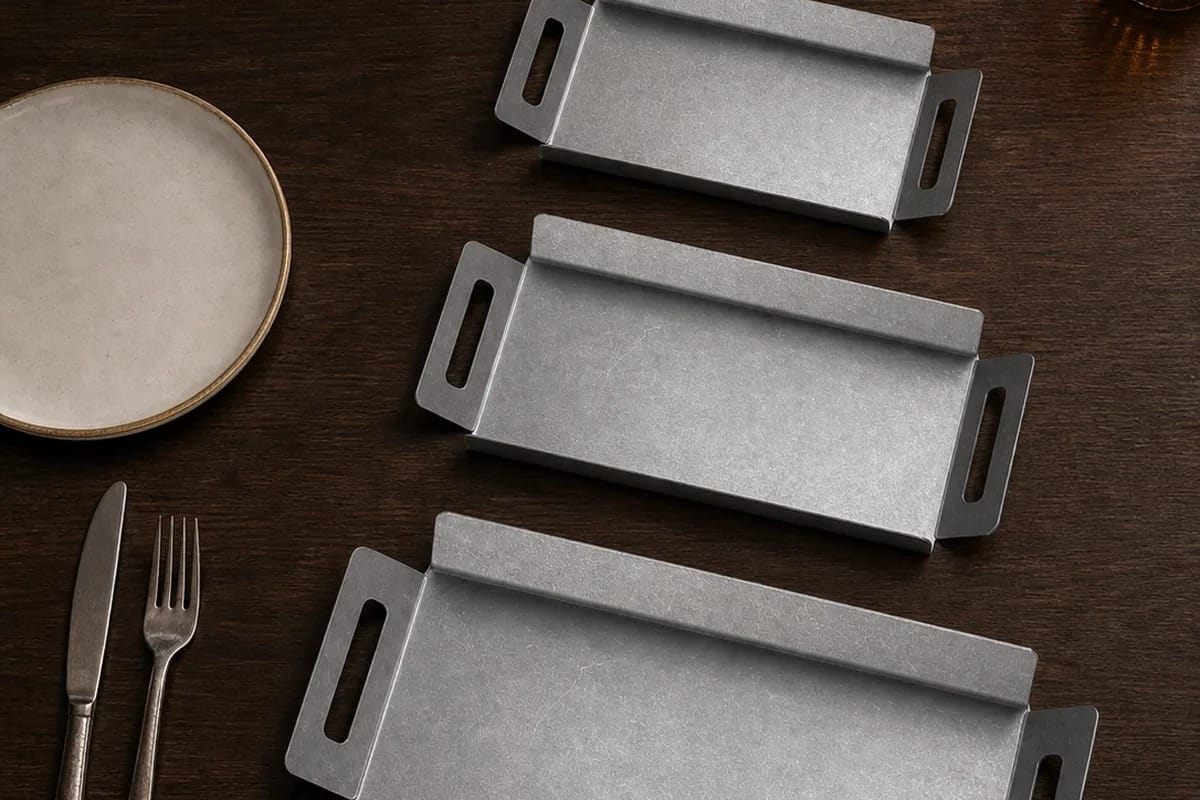
The series is supplied in three sizes, each with published outer dimensions, inner serving area, unit weight and carton quantity:
| Size | Outer dimensions | Inner area | Weight | Qty/carton |
|---|---|---|---|---|
| Small | 38.8 x 21.5 x 3.5 cm | 30.4 x 14.5 cm | 980 g | 20 pcs |
| Medium | 44 x 24.7 x 3.3 cm | 35 x 17 cm | 1270 g | 15 pcs |
| Large | 51.4 x 28.5 x 3.1 cm | 41.7 x 20.7 cm | 1720 g | 10 pcs |
Three observations for order planning:
- The Medium model is the working middle. At 44 cm outer length with a 35 x 17 cm inner area, it serves the classic table-service and counter-display roles — the size most operations will order in the largest quantity.
- Weight scales with footprint, not height. From Small to Large, outer length grows about 32% while unit weight grows about 76% (980 g to 1720 g) — the wide flat bed is where the metal lives, so freight class the trays by weight, not by the shallow profile alone.
- Carton density falls as size rises — from 20 pieces per carton down to 10. Large-format trays mean bulkier, heavier cartons; review carton dimensions and warehouse handling plans for the Large SKU before confirming volume.
One important note: the supplied packing table lists slightly different outer dimensions (39.2 x 21.5 x 3.8 cm, 44.2 x 24.8 x 3.8 cm, and 51.5 x 28.8 x 3.8 cm) — a variance of 0.1–0.4 cm between sources. Confirm the final production specification in writing before ordering.
Match the material question to the service reality
This is where vintage-style trays demand the most buyer discipline. The supplied product evidence confirms a metal tray with a mottled snowflake-gray surface — the finish is visible and consistent across the series. However, the exact metal type, alloy and surface treatment are not confirmed in the supplied documents.
That gap is not a dealbreaker — it is a request-for-quote item. Before ordering, ask for written confirmation of:
- the metal type and alloy grade used in the production lot;
- the surface treatment that produces the mottled finish, and whether it is a coating or the base metal;
- whether the tray is suitable for direct food contact, and under which conditions;
- the approved cleaning method — the mottled vintage surface may not tolerate the same abrasion or chemistry as plain polished stainless;
- heat compatibility, if the trays will carry hot dishes or sit under heat lamps.
Handling is straightforward on the evidence supplied: use the two cutout handles when positioning the tray, and avoid loading beyond the limits confirmed for the final production model.
Treat carton data as a purchasing input, not an afterthought
Packing is often left to the last stage of a quotation. For hotel projects and distributors, that is too late — carton quantity differs per size and directly affects warehouse planning, order consolidation and freight cost.
Before confirming an order, request written confirmation of:
- the selected size mix and quantity per SKU;
- carton dimensions, gross weight and labelling for each size;
- inner packing and protective materials between stacked trays;
- any logo, packaging or custom presentation requirement.
Yorkers International provides full OEM/ODM support for logo, packaging and design. The exact specification, MOQ, lead time and commercial terms should be agreed for the selected order rather than assumed from a general listing.
Ask the technical questions the product page does not answer
The published data for this series covers three sizes, outer dimensions, inner areas, unit weights and carton quantities. It does not fix the metal type, surface treatment, food-contact suitability, cleaning method, MOQ or lead time.
A practical request-for-quote checklist includes:
- What metal type and alloy applies to the production lot?
- What surface treatment produces the mottled finish, and is it food-contact safe?
- What cleaning method and detergents are approved for the finish?
- What are the confirmed final production dimensions — resolving the 0.1–0.4 cm variance between the two supplied sources?
- What MOQ, lead time and customization terms apply to the order?
Yorkers International manufactures tableware and hotel supplies in Shenzhen, China, and exports to more than 50 countries. Test reports can be provided per order as requested, and third-party factory inspection is welcome.
Build a tray program, not a one-off purchase
The strongest commercial result comes from a coherent tray program. A three-size vintage series lets one aesthetic run from single-guest service (Small) to shareable banquet and display presentation (Large) with the same mottled surface, the same cutout handles and the same care routine. For distributors, that creates a clear assortment position:
- one product family covering table service, counter display and back-of-house organization;
- carton formats scaled from dense (20/carton) to bulky (10/carton) for mixed shipments;
- an OEM/ODM path for branded versions of the same structure;
- a size-based service setup: three footprints that can be assigned by station rather than improvised.
The final purchase decision should be based on confirmed specifications, samples and the required packing plan — the visible vintage surface is the starting point, not the conclusion.
Final checklist before you request a quote
Use this short checklist when comparing vintage metal serving tray series:
- [ ] The service scenarios each size will serve are defined.
- [ ] The size mix (38.8 / 44 / 51.4 cm) has been mapped to tables, counters and stations.
- [ ] Metal type, alloy and surface treatment have been confirmed in writing.
- [ ] Food-contact suitability, cleaning method and heat compatibility have been confirmed.
- [ ] The 0.1–0.4 cm dimension variance between supplied sources has been resolved.
- [ ] Unit weights, carton quantities and carton dimensions have been reviewed.
- [ ] Inner packing, MOQ and lead time have been requested in writing.
- [ ] Custom logo, packaging or design requirements are specified.
Need a vintage serving tray quotation or sample plan?
The American Vintage Metal Serving Tray offers three supplied sizes with published dimensions, unit weights and carton data for restaurant and hotel programs. Share your application, quantities and packing requirements with Yorkers International, and the team can help prepare the appropriate product and quotation discussion.